Active Kilitop and Safaris

'
A tent below Kibo at camp
Home/Kilimanjaro/Lemosho Route
Kilimanjaro · 8 days · Western approach · Private climb

Lemosho Route

Eight days from the quiet western forest to Uhuru Peak — three nights crossing the Shira Plateau before the route turns for the summit, which is the whole argument for choosing it.

Londorossi GateShira PlateauBarrancoUhuru PeakMweka Gate
Length8 days · 7 nights on the mountain
SummitUhuru Peak, about 5,895 m
Starts & endsLondorossi Gate / Mweka Gate
SleepingTents, seven camps
Best monthsJanuary–February, June–October
IOverview

Time on the mountain is the whole argument.

Almost nobody turns back on Kilimanjaro because they were not fit enough. They turn back because they went up too fast. Lemosho is built around that: it starts on the quiet western side of the mountain, spends its first days in the forest and on the Shira Plateau at heights where the body can keep up, and only then joins the southern circuit at Barranco for the approach to the summit.

The first three days are the quietest on any of the popular routes. From Barranco onwards you share the camps with the Machame climbers, and Barafu on summit night is busy in the dry months. What it does not give you is a short trip: it is eight days on the mountain, plus the nights in Moshi either side. If your dates are fixed, a seven-day version exists — we would rather you took the eight.

Major attractions · 4
  1. 01Kilimanjaro National Park
  2. 02Shira Plateau
  3. 03Lava Tower & the Barranco Wall
  4. 04Uhuru Peak
Trip detailsPrivate climb
Length
8 days · 7 nights on the mountain
Route
Lemosho, joining the southern circuit at Barranco
Start / end
Londorossi Gate (west) / Mweka Gate (south)
Sleeping
Tents, seven camps
Summit
Uhuru Peak, about 5,895 m
Group size
Maximum per private climb
Meals
Three meals a day on the mountain
Best period
Jan–Feb · Jun–Oct
Fitness
No technical climbing — long days walking at altitude
Request a free quote →Questions? WhatsApp +255 762 914 714
IIThe route

In from the west, round the south, down to Mweka.

8 days, 7 nights, 7 places to sleep. The solid line is this plan; the dotted lines are the other roads through the region. Point at a day to see its leg.

Route map: The Lemosho Route: Londorossi and Lemosho Gates, the Shira Plateau, Lava Tower, Barranco, Karanga, Barafu, Uhuru Peak and down to Mweka Gate Kilimanjaro NP Kibo N Uhuru Peak Mti Mkubwa Shira 1 Shira 2 Barranco Karanga Barafu Mweka Camp Londorossi Gate Mweka Gate Lemosho Gate Lava Tower
Drawn to scale

Every metre up, and every metre down.

The shape is the point. Three nights rising slowly across the Shira Plateau, then day four climbs to Lava Tower at about 4,630 m and comes down to sleep at Barranco, about 670 m lower — climb high, sleep low. Summit night is the one big step, and the descent afterwards is steep.

Elevation profile: Lemosho Route 2,000 3,000 4,000 5,000 6,000 Day 1 Day 2 Day 3 Day 4 Day 5 Day 6 Day 7 Day 8 Lemosho Gate Mti Mkubwa Shira 1 Shira 2 Lava Tower Barranco Karanga Barafu Uhuru Peak Mweka Camp Mweka Gate Metres above sea level. Altitudes rounded; published figures for some camps differ by up to about 100 m.
IIIDay by day

Eight days, one at a time.

Each day lands on top of the last as you scroll: honest road time, game time, meals and where you sleep. Times are door to door in a safari vehicle and move with the season and what you stop for.

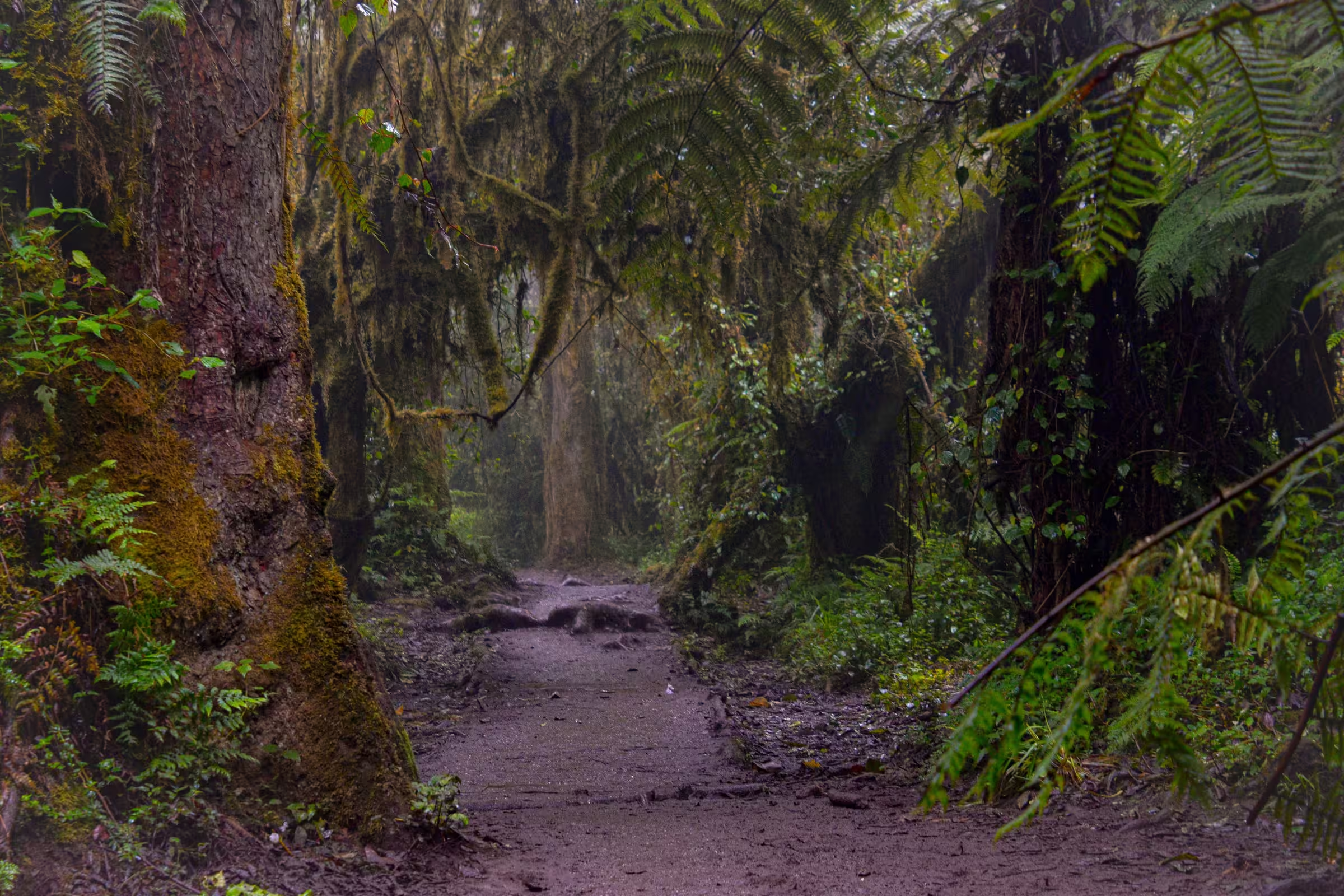
A path through moss-hung rainforest on Kilimanjaro's lower slopes
Mti Mkubwa
01/ 08

About 3–4 hours by road round the mountain, registration, then a short first walk into the forest.

03°00′S 37°11′EDay 1 · Moshi → Londorossi Gate → Lemosho Gate → Mti Mkubwa

Round the mountain to the western forest

Travel
~3 h walking + ~4 h road
Highest point
Mti Mkubwa, about 2,890 m
Meals
L · D
Sleep
Tented camp, about 2,890 m
  1. Morning

    Collected from your hotel in Moshi and driven round the western side of the mountain to Londorossi Gate, about 2,250 m, for registration and the weighing of the porters’ loads. It is a long drive, the last part on dirt.

  2. Afternoon

    On to Lemosho Gate, about 2,100 m, and the first walk: a gentle climb through montane forest. Colobus monkeys are often in the canopy, and afternoon rain is common.

  3. Evening

    Mti Mkubwa, ‘big tree’, at about 2,890 m. The camp is up before you arrive. The guide’s first evening check and a briefing on the days ahead.

Pole pole

Slowly, slowly. The guide sets a pace that feels absurdly easy on the first day. That is deliberate, and it is the most useful thing you will hear all week.

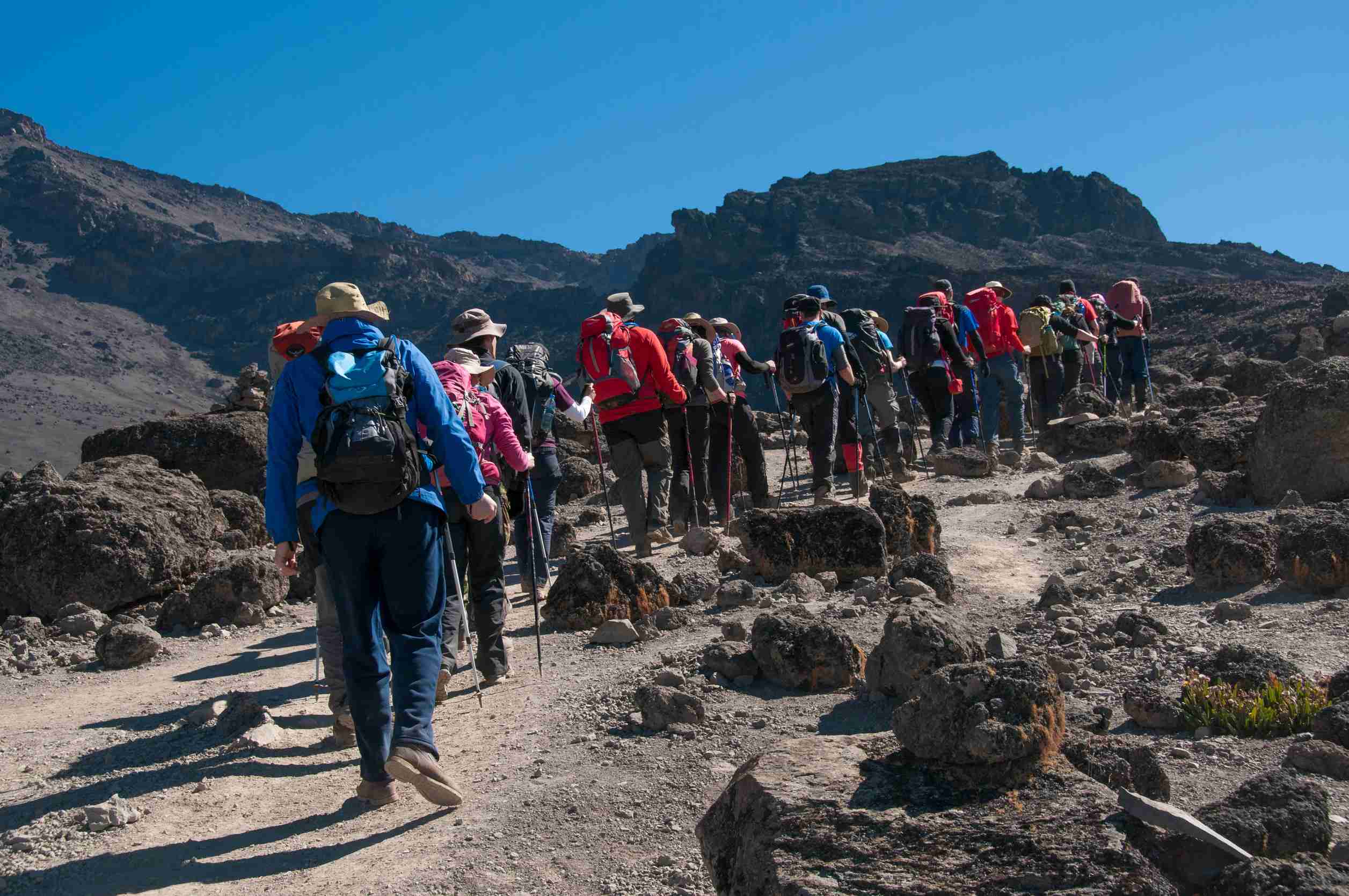
Climbers on a moorland trail with Kilimanjaro's summit behind
Shira 1
02/ 08

About 5–6 hours, forest giving way to heath and moorland.

03°01′S 37°14′EDay 2 · Mti Mkubwa → Shira 1

Out of the trees onto the Shira Plateau

Travel
~6 h walking
Highest point
Shira 1, about 3,500 m
Meals
B · L · D
Sleep
Tented camp, about 3,500 m
  1. Morning

    The forest thins into giant heath and the path climbs steadily onto the rim of the Shira Plateau, an old collapsed caldera on the mountain’s western shoulder.

  2. Afternoon

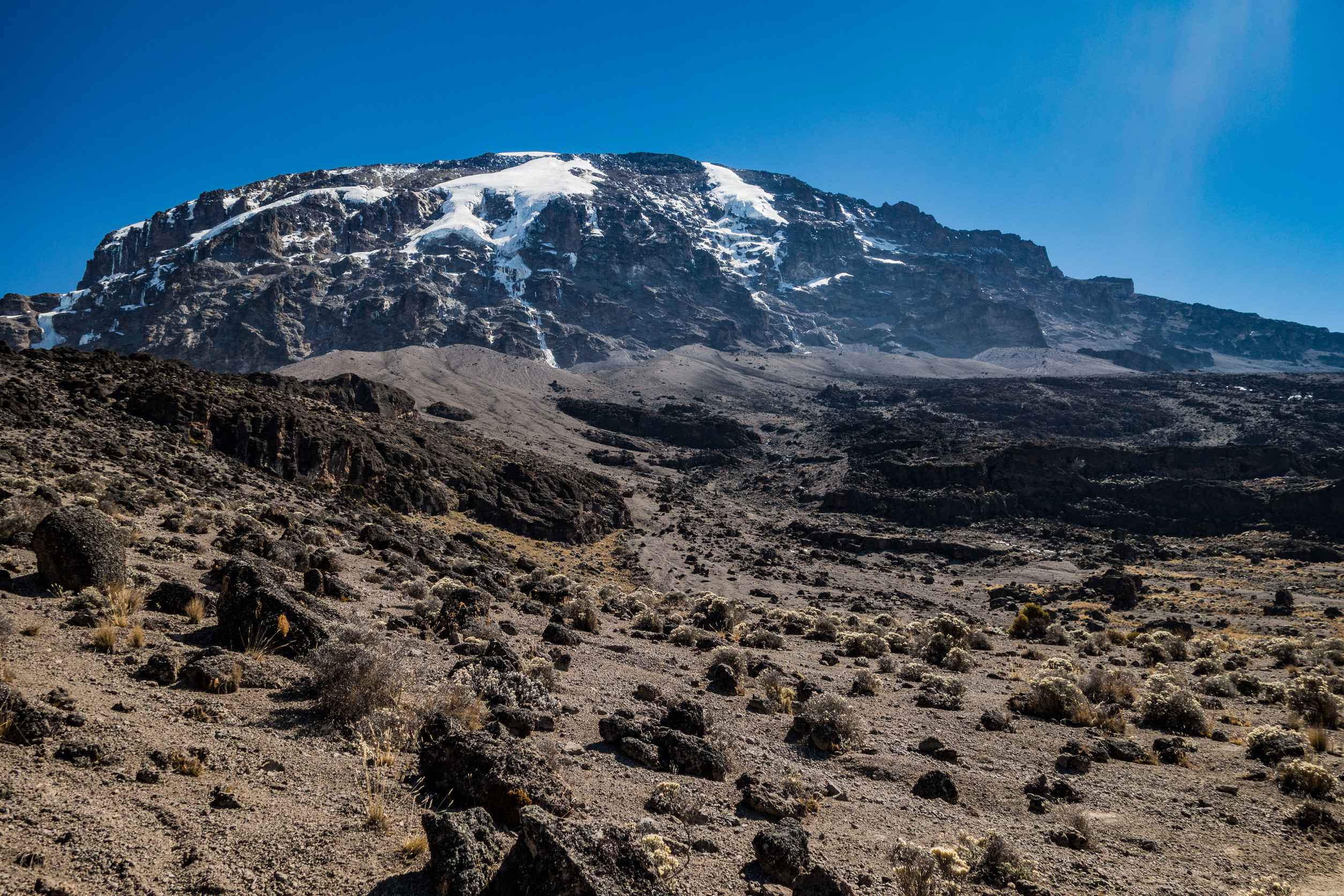
    Across the moorland to Shira 1 at about 3,500 m. On a clear afternoon this is your first full view of Kibo, the summit cone.

  3. Evening

    The first night where many people notice the height — a light headache, broken sleep. Tell the guide at the evening check; it is what the check is for.

Kilimanjaro's snow-capped summit under a blue sky
Shira 2
03/ 08

A deliberately short day, about 4 hours, gaining only a few hundred metres.

03°03′S 37°17′EDay 3 · Shira 1 → Shira 2

Across the plateau

Travel
~4 h walking
Highest point
Shira 2, about 3,850 m
Meals
B · L · D
Sleep
Tented camp, about 3,850 m
  1. Morning

    An easy walk east across the plateau. The gradient is gentle and the views open in every direction, west to Mount Meru on a clear day.

  2. Afternoon

    Into Shira 2 at about 3,850 m in good time. The guide may take you a little higher and back down before dinner — a short acclimatisation walk.

  3. Evening

    Resting is part of the plan today. Drink, eat, and sleep if you can.

Why so short

The height, not the distance, is what the day is for. A few hundred metres a day, at this altitude, is what lets the body keep up.

Kilimanjaro's summit and glaciers above lava rock
Barranco
04/ 08

About 7 hours. Up to about 4,630 m for lunch, then down to sleep about 670 m lower.

03°06′S 37°20′EDay 4 · Shira 2 → Lava Tower → Barranco

Climb high to Lava Tower, sleep low at Barranco

Travel
~7 h walking
Highest point
Lava Tower, about 4,630 m
Meals
B · L · D
Sleep
Tented camp, about 3,960 m
  1. Morning

    East out of the moorland into alpine desert — bare scree and rock — climbing steadily towards Lava Tower, a volcanic plug at about 4,630 m.

  2. Midday

    Lunch at Lava Tower. This is the highest you will have been, and many people feel it: headache, no appetite, breathlessness. That is expected.

  3. Afternoon

    Down into the Barranco Valley among the giant groundsels to camp at about 3,960 m. Most people feel better at bedtime than they did at lunch — which is exactly why the day is shaped this way.

The most important day

Climb high, sleep low. The body is asked to cope with height for a few hours, then allowed to recover lower down. It does more for summit night than any amount of training.

A line of climbers on a rocky path in the alpine zone
Karanga
05/ 08

About 4–5 hours: a scramble up the Wall, then valleys to Karanga.

03°07′S 37°21′EDay 5 · Barranco → Karanga

The Barranco Wall

Travel
~4 h walking
Highest point
Karanga, about 3,995 m
Meals
B · L · D
Sleep
Tented camp, about 3,995 m
  1. Morning

    Straight onto the Barranco Wall. It looks worse from below than it is: a steep path with a few short sections where you use your hands. No ropes, no technical skill, and often a queue in the busy months.

  2. Midday

    Over the top and along the southern flank of Kibo, down and up through a series of valleys.

  3. Afternoon

    Karanga at about 3,995 m — almost the same height as last night, which is the point. A rest day in all but name.

Hands, not ropes

Porters carry the camp up the Wall too. Keep your hands free — poles strapped to the pack for the steep part.

Tents pitched among rocks above a sea of clouds
Barafu
06/ 08

About 4 hours to base camp, arriving early to rest before summit night.

03°06′S 37°23′EDay 6 · Karanga → Barafu

Up to base camp

Travel
~4 h walking
Highest point
Barafu, about 4,670 m
Meals
B · L · D
Sleep
Tented camp, about 4,670 m
  1. Morning

    A steady climb through alpine desert to Barafu, a camp on a bare rock ridge at about 4,670 m.

  2. Afternoon

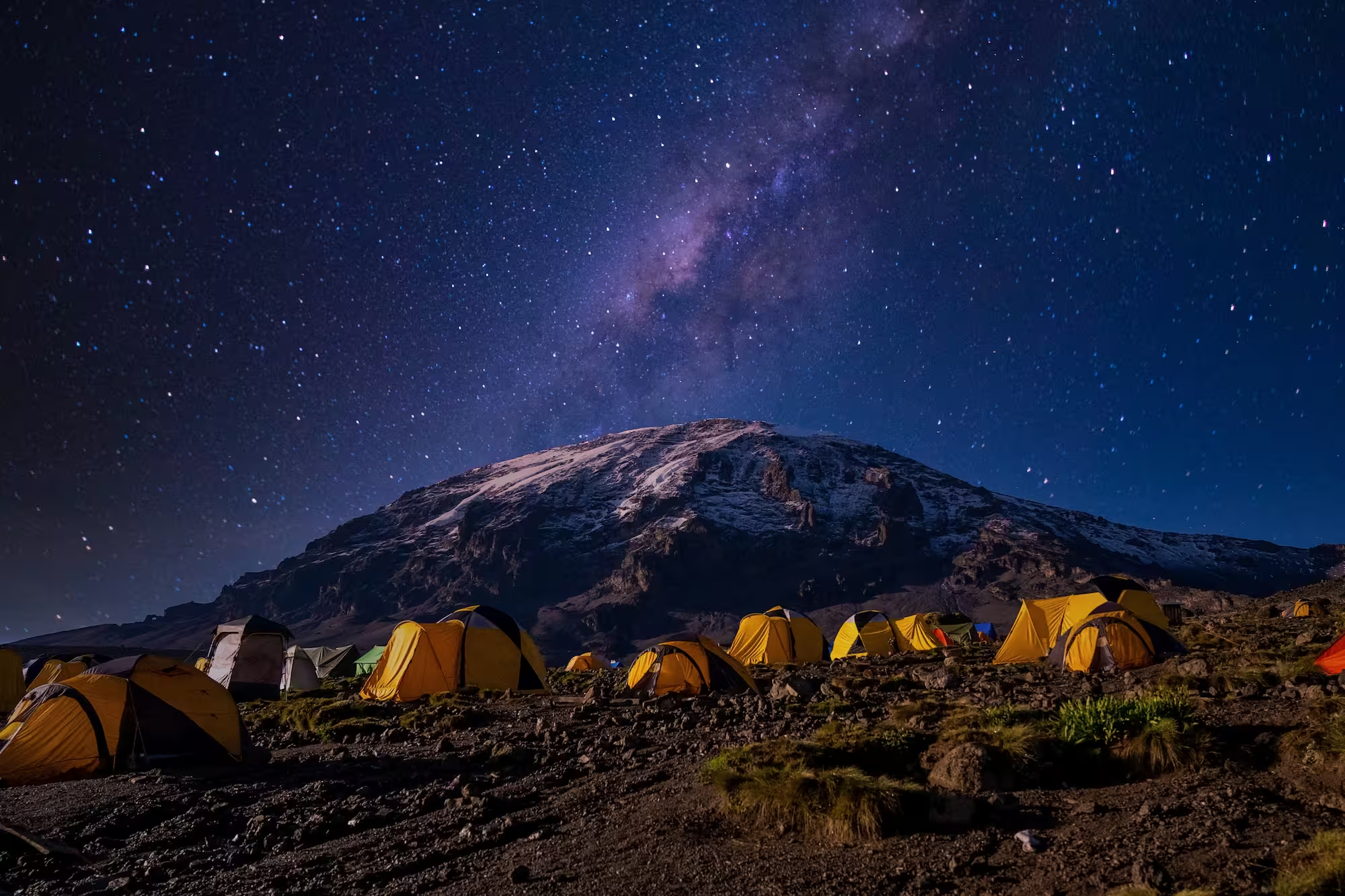
    Early dinner, the kit laid out for the night, and the guide’s summit briefing. Then bed, early.

  3. Evening

    Almost nobody sleeps well at Barafu. That is normal; lying still and resting still helps.

Tents under a starry sky below Kilimanjaro's summit
Mweka Camp
The long day07/ 08

The long one: about 12–14 hours, most of it in the dark or on the way down.

03°09′S 37°22′EDay 7 · Barafu → Uhuru Peak → Mweka Camp

Summit night, then down to Mweka

Travel
~13 h walking
Highest point
Uhuru Peak, about 5,895 m
Meals
B · L · D
Sleep
Tented camp, about 3,100 m
  1. Around midnight

    Tea and biscuits, then up the scree by head torch. Slow, steady, with short stops. It is cold and dark and the hardest thing on the climb.

  2. Dawn

    Stella Point on the crater rim, usually around sunrise, then along the rim to Uhuru Peak at about 5,895 m. Photographs, and not long at the top.

  3. Afternoon

    Down to Barafu for a rest and something to eat, then on down to Mweka Camp at about 3,100 m. Your legs will know about it.

Turning back is allowed

If you or the guide decide you should go down, an assistant guide takes you while the others carry on. Going down is the right answer to worsening altitude sickness, at any point.

A path through moss-hung rainforest on Kilimanjaro's lower slopes
Moshi
08/ 08

About 3–4 hours down through the rainforest, then the drive back to Moshi.

03°21′S 37°21′EDay 8 · Mweka Camp → Mweka Gate → Moshi

Through the forest to Mweka Gate

Travel
~3½ h walking + ~1 h road
Highest point
Mweka Camp, about 3,100 m
Meals
B
Sleep
Homeward
  1. Morning

    The crew’s farewell and the tipping, done openly, then a steady descent through rainforest — wet underfoot, loud with birds.

  2. Midday

    Signing out at Mweka Gate at about 1,640 m, where summit certificates are issued. Then the drive back to Moshi and a very long shower.

Knees

The descent from Uhuru to the gate is over 4,000 m in two days. Poles help more here than anywhere else.

IVRates

Priced by group size, because the vehicle is shared.

Park fees, accommodation, vehicle, guide and meals as listed — per person, no booking fees. Rates move with the month and lodge availability; your quote is fixed once you book.

Private climb · price per person, sharing
Group size1 person2 people3 people4 people5 people6 people
From yearraterateraterateraterate
Single supplementamount
Children

Child policy: ages, sharing discount, lodge minimum ages

What moves the price

What changes itHow much
  • How many climb together

    Guides, cook and the camp are shared by the group, so the per-person price falls as the group grows. Park fees do not.

  • Days on the mountain

    Park fees are charged per person per day, and each extra day adds crew wages and food. Eight days costs more than seven, and is worth it.

  • The camp you want

    A private toilet tent, a larger sleeping tent or an extra porter each add to the price.

  • Hotels either side

    The nights in Moshi or Arusha before and after are priced at the level you choose.

  • Park fees

    Set by the park per person per day, and the same whoever you climb with. We show them as their own line.

Not sure which level suits you? Tell us your dates, group and budget and we will send an itemised quote with named properties.

Request a free quote →
On request
On request
VWhere you sleep

Seven nights, seven camps, all under canvas.

Each night is described by type first, because the right camp depends on your month. The properties we normally use at each level are listed below; your quote confirms them against availability.

Night 11×

Mti Mkubwa

Tented camp, about 2,890 m

The first night in the forest, low enough to be easy.

Standard here means
Sleeping tent, mess tent and toilet tent — confirm what the standard climb provides
Step up
Ask us
Night 21×

Shira 1

Tented camp, about 3,500 m

On the western edge of the plateau, with the first open view of Kibo.

Standard here means
Sleeping tent, mess tent and toilet tent — confirm what the standard climb provides
Step up
Ask us
Night 31×

Shira 2

Tented camp, about 3,850 m

A short day’s walk from Shira 1, so the body has time to adjust.

Standard here means
Sleeping tent, mess tent and toilet tent — confirm what the standard climb provides
Step up
Ask us
Night 41×

Barranco

Tented camp, about 3,960 m

The ‘sleep low’ after Lava Tower, under the Barranco Wall.

Standard here means
Sleeping tent, mess tent and toilet tent — confirm what the standard climb provides
Step up
Ask us
Night 51×

Karanga

Tented camp, about 3,995 m

Almost level with Barranco: a short day and a quiet evening before base camp.

Standard here means
Sleeping tent, mess tent and toilet tent — confirm what the standard climb provides
Step up
Ask us
Night 61×

Barafu

Tented camp, about 4,670 m

Base camp for summit night. A few hours’ rest, not a full night.

Standard here means
Sleeping tent, mess tent and toilet tent — confirm what the standard climb provides
Step up
Ask us
Night 71×

Mweka Camp

Tented camp, about 3,100 m

Back in thicker air after the summit, and a short walk from the gate.

Standard here means
Sleeping tent, mess tent and toilet tent — confirm what the standard climb provides
Step up
Ask us

The properties we use

WherePrivate climb
Mti Mkubwaproperty
Shira 1property
Shira 2property
Barrancoproperty
Karangaproperty
Barafuproperty
Mweka Campproperty

What ‘standard’ means on this trip

  • Your own sleeping tent. Tent type and how many people share one
  • A mess tent. Meals at a table, out of the wind. Confirm table, chairs and lighting
  • A toilet tent. Confirm a private toilet tent is standard, or an add-on
  • Food and water. Three meals a day cooked on the mountain, and treated drinking water. Tell us about diets early — the food goes up with the porters.
VIThe fine print

What is in the price, and what isn’t.

✓Included

  • Park feesConservation, camping or hut, and rescue fees — each itemised on your quote
  • A licensed lead guidePlus assistant guides in proportion to the group
  • Cook and portersCarrying the camp, the food and your main bag within the park’s weight limit
  • Meals on the mountainThree meals a day and treated drinking water
  • Transfers to and from the gateFrom your hotel in Moshi or Arusha

–Not included

  • International flights
  • Hotel nights before and afterAdded to the quote at the level you choose
  • Tanzanian visaApply online before you travel
  • Travel insuranceRequired. It must cover trekking to 6,000 m and evacuation
  • Tips for the crewThe largest cost people forget; we send a guideline with your booking
  • Kit hireSleeping bag, poles, jacket — available in Moshi if you do not bring your own
VIIAdd-ons & changes

The plan is a starting point, not a package.

The changes people ask for most, each with what it costs you in days or hours. Not in the standard price — arranged on request, and most can be combined.

−1 dayprice

Machame instead

Starts on the southern side, closer to Moshi, and rejoins this route at Shira 2. One day shorter and busier from the first morning.

Makes senseFixed dates, one day fewer
The Machame Route →
+1 dayprice

The Northern Circuit

The same western start, then round the quiet northern slopes instead of the southern circuit. The longest route, and the most time to adjust.

Makes senseYou want the quietest trail and the most time
The Northern Circuit →
Same lengthprice

Compare every route

Six routes, side by side: how long they take, how busy they are, and how each one handles the altitude.

Makes senseYou are still choosing
All Kilimanjaro routes →
+1 dayprice

Materuni Waterfall before you start

A half day from Moshi: a walk to the waterfall on the lower slopes and a coffee farm. Easy legs the day before the climb.

Makes senseYou land a day early
Materuni Waterfall →
+1 dayprice

Chemka Hot Springs after

Warm, clear spring water about an hour from Moshi. The obvious thing to do with tired legs.

Makes senseThe day after the climb
Chemka Hot Springs →
+3–4 daysprice

A safari after the climb

Tarangire, the Serengeti and the Ngorongoro Crater, straight from Moshi or Arusha. Sitting down for a few days is welcome.

Makes senseYou have come this far
Northern Circuit Express →
VIIIWhen to go

Rated for this route, not for the country.

Lemosho can be climbed in any month, but the forest days are muddy and the plateau often in cloud in the long rains of April and May. January, February and June to October are drier and clearer; July, August and the Christmas weeks are the busiest, and the camps from Barranco onwards are shared with the Machame climbers whatever the month.

Jan
Dry, clear, cold nights
Feb
Dry, warmer
Mar
Rains building
Apr
Long rains, wet trails
May
Long rains
Jun
Dry, cold, quieter
Jul
Dry, cold, busy
Aug
Dry, busy
Sep
Dry, clear
Oct
Dry, warmer
Nov
Short rains
Dec
Holiday weeks busy
Three bars — the route at its bestTwo — good, with trade-offsOne — possible, and quiet
IXFlights & extras

Getting there.

Arrive

Kilimanjaro International (JRO)

Between Moshi and Arusha, and the closest international airport to the mountain. Plan to land at least a day before the climb: the briefing and the kit check happen the evening before.

Stay before and after

Moshi or Arusha

A night before the climb and a night after are not part of the days shown here; we add them to your quote at the hotel level you choose.

Leave a spare day

Weather and bodies

Nothing is scheduled around the summit day, but a day in hand before an international flight takes the pressure off everyone.

What else to budget.

Not part of the safari price, in order of how much they matter.

  • Tanzanian visaApply online before travel
    Current fee
  • Travel insuranceMust cover trekking to 6,000 m and evacuation
    Typical cost
  • Crew tipsGuides, cook and porters, for the whole climb
    Guideline
  • Kit hire in MoshiSleeping bag, poles, down jacket
    Typical range
  • Hotel nightsMoshi or Arusha, before and after
    Varies
XWhy book with us

Only what we can prove.

01

Arusha, since 2010

A Tanzanian company, locally owned, running climbs and safaris for more than fifteen years.

02

Licensed and registered

TALA-licensed through the Tanzania Tourist Board and registered with BRELA. Ask us for the numbers; we will send them.

03

One lead guide, one crew

The same lead guide, assistant guides, cook and porters from the gate to the gate. Nobody else joins your group.

04

Every fee on its own line

Conservation, camping or hut, and rescue fees are shown separately on your quote, so you can see exactly what goes to the park.

XIQuestions

The ones we are asked most.

Fit enough to walk five to seven hours a day, on consecutive days, with a light pack — and a very long day near the end. If you can walk a full day in hill country and do it again the next day, you are fit enough. Fitness does not protect you from the altitude; pace does.

The body adapts to thinner air, but only at its own pace. Lemosho gives it three nights rising slowly across the Shira Plateau, then the Lava Tower day — climb high, sleep low — before the summit. That is the reason for choosing eight days over seven.

You leave Barafu around midnight and walk slowly up scree by head torch for several hours, reaching the crater rim around dawn. It is cold, dark and hard. After the summit you descend to Mweka Camp the same day — about 12 to 14 hours in all. Ask us what to expect for temperature in your month.

Acute mountain sickness can affect anyone, however fit. Mild symptoms — headache, poor sleep, no appetite — are common. The guide checks everyone each evening, and the answer to symptoms that are getting worse is to go down, at any hour. Whether to take medication such as acetazolamide is a decision for your own doctor, before you travel.

Tips for the guides, cook and porters are expected and are a real part of their pay. We send a guideline per role with your booking, and the tipping at the end is done openly so everyone sees what they received.

Yes — sleeping bags, poles, down jackets and more can be hired in Moshi. Tell us what you need when you book and we will have it ready for the kit check the evening before. Bring your own broken-in boots.

Begin here

Send us your dates. We will send you the real version.

Named camps, the right direction of travel for your month, every fee on its own line — and a straight answer if another plan would suit you better.

Rather talk it through?WhatsApp us+255 762 914 714
Safari request Lemosho Route 8 days · 7 nights · private climb
01When, and what for?
How fixed are the dates?
What do you want from it? Pick any
02Who’s coming?
Travelling as
03How you like it
Style of camp

Not a commitment. It lets us send something realistic instead of something you have to reject.

04Where to reach you
We need a name to write back to.
That email address does not look complete.
Step 1 of 4
Loading itinerary…
Saved Trips