Active Kilitop and Safaris

'
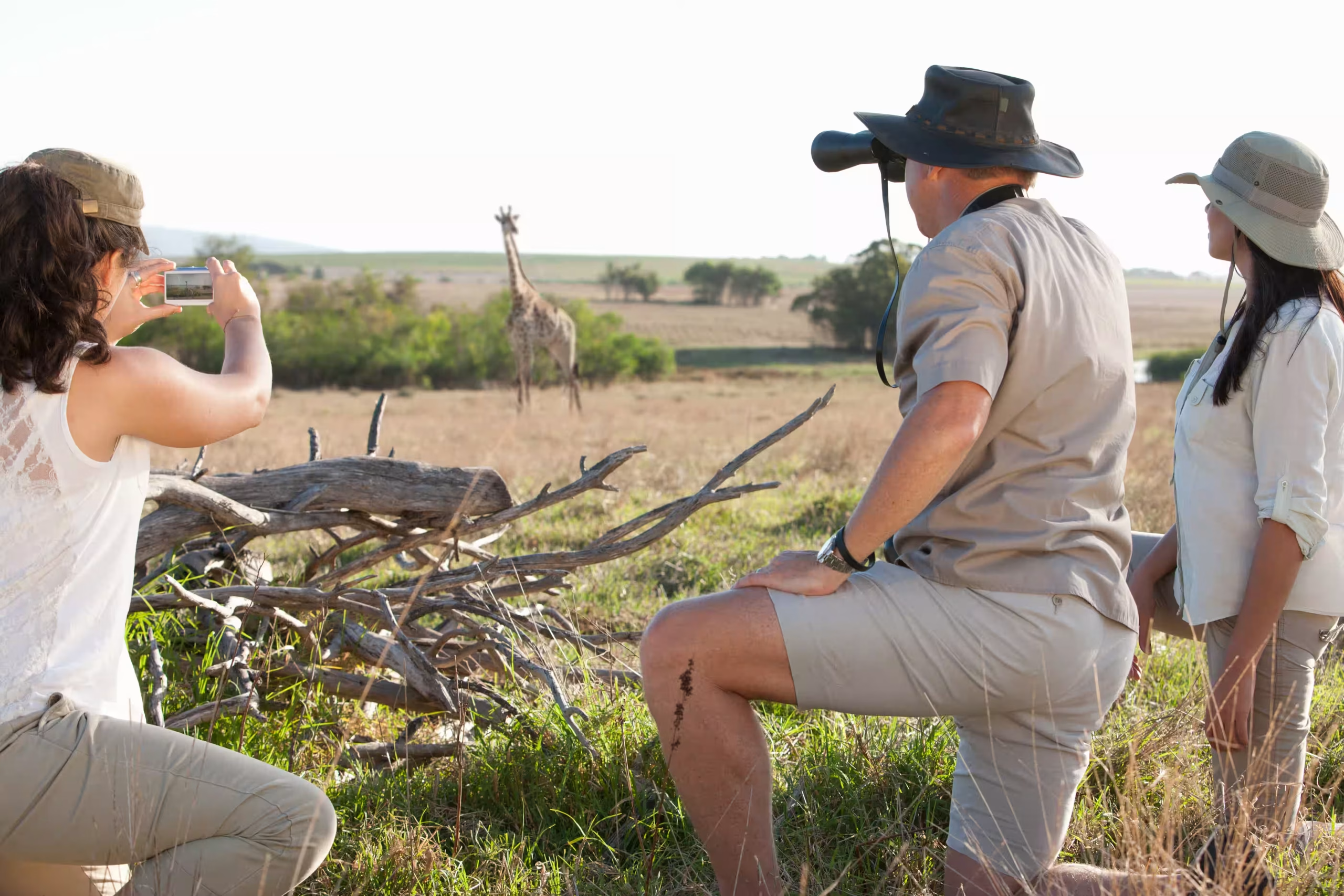
A guide and guests photographing giraffe on foot
Experience · Every park

Your vehicle matters more than your lens.

Almost everything that separates the photographs you came home with from the ones you hoped for happens before you raise the camera. Here is what actually changes your pictures, in order, with the kit deliberately last.

Best lightFirst & last 90 minutes
The variableA private vehicle
WhereAll parks
Best monthsJun–Oct, and Feb
01

The short version, if you read nothing else.

We have watched a lot of people spend a lot of money on the wrong part of this.

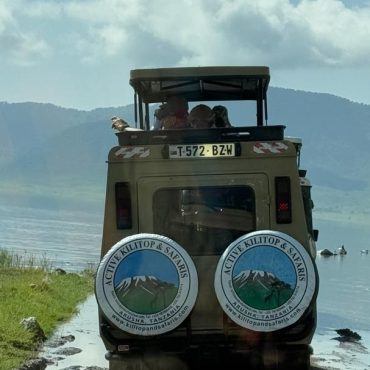
A private vehicle changes more than any lens you can buy.

Sharing a vehicle means the sighting ends when the least patient person in it is ready to leave, and starts when the most eager one wants to arrive. Every serious photographic decision — wait, reverse, reposition, stay another forty minutes — requires that the car is yours.

You are shooting for about three hours a day.

The first ninety minutes and the last ninety minutes. What happens between ten and four is a different, harsher photograph, and no amount of equipment fixes overhead light. Plan the day around that rather than being disappointed by it.

The guide is the difference between a record and a picture.

A good one puts the sun behind you, reads which way the animal will walk, and parks so the background is clean grass rather than another vehicle. That is a skill, it is not universal, and it is worth asking for by name when you book.

02

The five things that change your photographs.

In order of how much difference they make. Notice where the camera comes.

01

A vehicle to yourself

Everything downstream depends on it. It is also the single largest line item you can add to a safari, which is exactly why it is worth deciding on before you start pricing lenses. If the budget only stretches to one upgrade on the whole trip, make it this one.

02

A guide who thinks in light

Ask for a guide used to photographers. They drive differently: they arrive at a sighting and then keep going another thirty metres to get the sun behind them, they reverse rather than creep forward, and they will sit in silence for an hour because the light is about to be right.

03

Being out in the two windows

Leave camp before it is light and come back for breakfast, then go out again for the last two hours. Full-day drives with a packed lunch sound efficient and mostly buy you the worst light of the day. Ask your camp for the early breakfast and take it.

04

Height, and getting lower

Almost every safari photograph is taken from too high up, because a roof hatch is where the space is. Shoot from the lowest window the vehicle has. Eye level with the animal is the single change that makes a picture look considered rather than snapped, and it costs nothing.

05

The kit — last, and on purpose

A beanbag on the window sill beats a tripod in a vehicle every time, and you can fill it with rice when you arrive. Two bodies beats changing lenses in dust. A 400mm you can hold steady beats a 600mm you cannot. Nobody has ever come home wishing they had spent the vehicle money on glass.

03

The day, by light.

Roughly, for the dry months. Sunrise and sunset move by half an hour or so across the year, and the equatorial dusk is short — you get much less warning than at home.

06:00–07:30

The best ninety minutes of the day. Low warm light, cool air, animals still active, dust not yet in the air. This is what you got up for.

07:30–10:00

Still workable and getting harder. Contrast climbs, shadows shorten. Good for behaviour and interaction rather than portraits.

10:00–16:00

Overhead and unflattering. Use it for sleeping cats in shade, backlit dust, black and white, or a rest. Trying to force a portrait now is how people fill a card with pictures they delete.

16:00–18:15

The second window opens, and the last forty minutes are the best of it. Golden, then orange, then gone very fast.

After dark

Only in the concessions, because night drives are not permitted inside the national parks. A different discipline entirely and worth a separate evening.

Late light, low angle, clean background: three decisions made before the shutter, not after.
Dust, and the two rules about it

Change lenses as little as you possibly can. Tanzanian dust in the dry season is fine, pervasive and gets everywhere, and a sensor cleaned in a tent is a sensor cleaned badly. Two bodies with a wide zoom on one and a long lens on the other is not an indulgence, it is the practical answer.

Bag everything, every time. A dry bag or even a bin liner over the camera between sightings, and a cheap rocket blower in the pocket. The people whose gear survives a month here are not the ones with the most expensive bodies, they are the ones who put the lid on.

04

Where each subject actually is.

You cannot photograph everything in one park, and trying to is the most common reason people come home with a thin set. Pick two subjects and build the route round them.

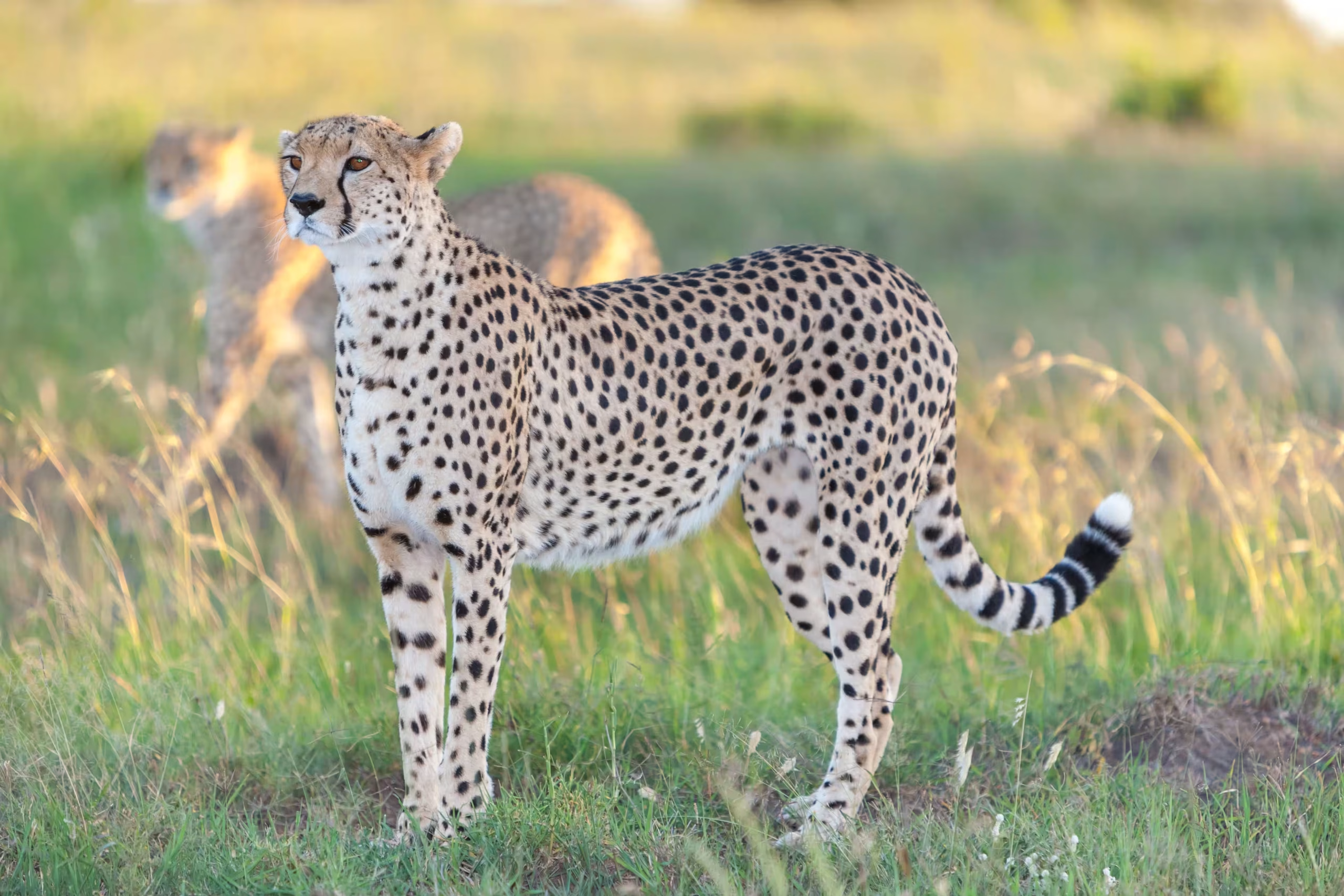
A cheetah strolling across an open plain
Photography safari — 1600×1100
Serengeti · Ngorongoro

Big cats & open plain

The Serengeti for lion and cheetah on clean, uncluttered ground with long sightlines, and for the migration if the timing lands. The Crater for density and for rhino at distance, but expect vehicles in your frame.

Tarangire · Ruaha

Elephant & big landscape

Baobabs, dust, and elephant in numbers with something in the background worth having. Tarangire in the dry months, Ruaha for the same thing with a tenth of the vehicles.

Manyara · Nyerere

Birds & water

Manyara for the soda lake and the groundwater forest in one morning. Nyerere for a boat, which puts you at eye level with everything on the bank — the single best photographic platform in Tanzania.

A hot-air balloon drifting over the plains
Photography safari — 1600×1100
A common mistake

Not from a balloon

A balloon is a wonderful hour and a poor photographic platform. You are several hundred metres up, moving, shooting down through haze at a fixed moment of the morning. Go up for the experience. Do not build a photographic trip around it, and do not take your only body with your only lens on it.

05

Questions we get asked.

What one lens, if I can only bring one?

A 100–400 or equivalent. It covers the great majority of what you will actually shoot, it is hand-holdable from a moving-ish vehicle, and it does not force you to change glass in dust. Add a wide zoom for landscape and camp if you have a second body.

Do I need a full-frame camera?

No. A crop sensor gives you reach for free, which is the thing you will want more often than low light. What matters far more is that you can operate it without thinking, because sightings do not wait.

Is a private vehicle really worth it?

For photography, yes, more than anything else on this list. For a general safari it is a genuine luxury you can skip. If you are asking the question because of the cost, the honest answer is that it buys you more photographs than the same money spent on a lens.

Can I use a drone?

No. Drones are not permitted in Tanzanian national parks without a research or filming permit obtained well in advance, and flying one without it risks confiscation and worse. Please do not bring one and assume.

Which months?

June to October for dust, dry light and concentrated game. February for the calving on the southern plains, which is the best behaviour photography of the year. The green season gives you dramatic skies, thin crowds and harder driving.

Should I book a dedicated photographic guide?

If photography is the reason for the trip, yes. They are a smaller pool and book up further ahead, so it is a decision to make early rather than on arrival.

Build the trip round the pictures.

Tell us what you want to come home with and roughly what you shoot on, and we will put the route, the vehicle and the guide together around that rather than the other way round.

Or call +255 762 914 714
Loading itinerary…
Saved Trips
