Active Kilitop and Safaris

'
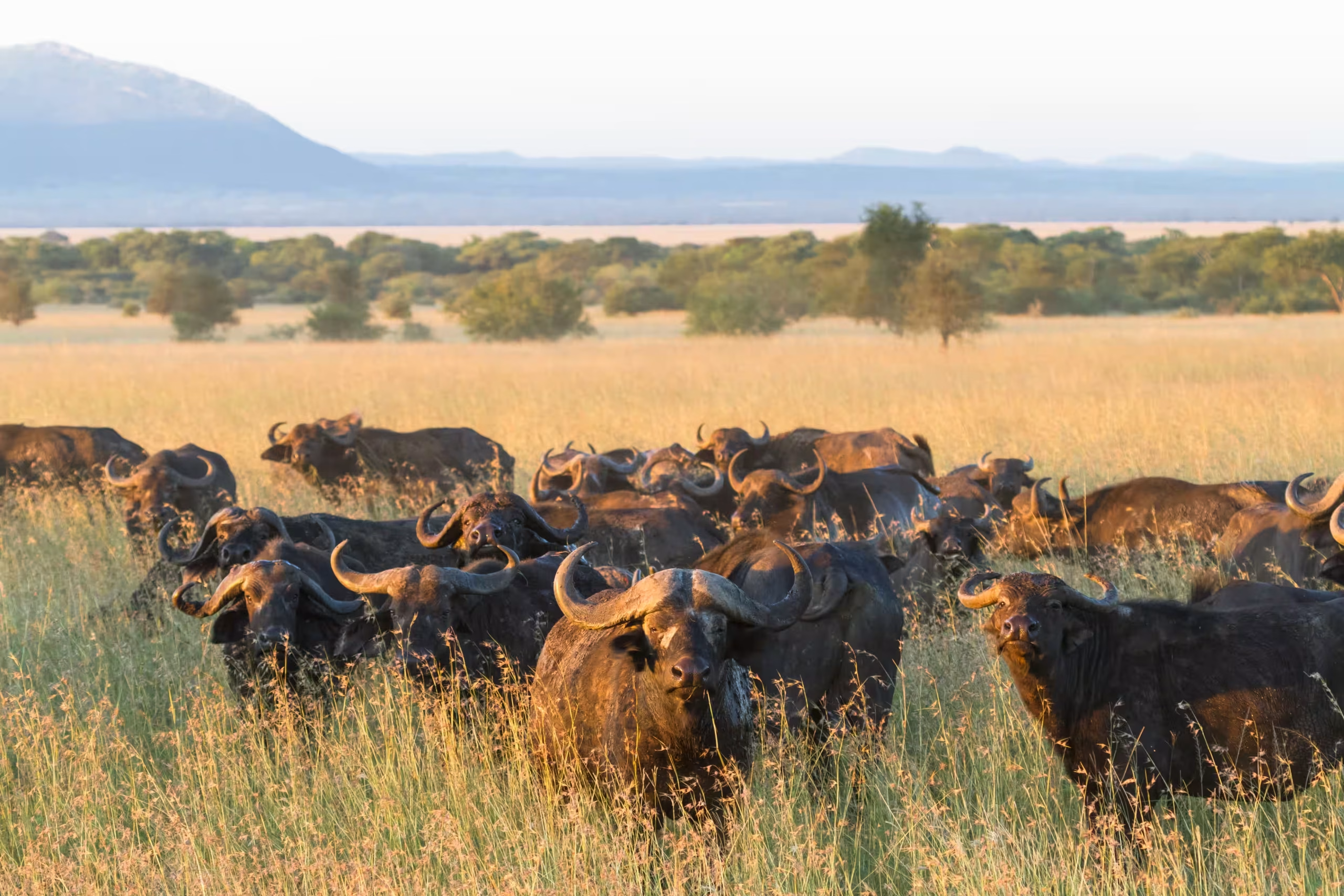
Wildebeest herds spread across the Serengeti plains at first light
Northern circuit · Tanzania

Serengeti National Park

Fourteen thousand square kilometres of open plain, and the stage for the largest overland migration on earth. Tanzania’s oldest national park, and the one almost everybody comes for.

Size14,750 km²
Established1951
From Arusha1 hr flight · 7–8 hr drive
Best monthsJun–Oct · Jan–Feb
Suggested stay3–5 nights
The place

An ecosystem, not a park.

The Serengeti is one contiguous ecosystem of about 30,000 km² that spills across the Kenyan border into the Maasai Mara. The national park is the protected heart of it — but the herds have never recognised the boundary, which is exactly why the place works.

Its name comes from the Maa word siringet, roughly “the place where the land runs on forever”, and on the southern short-grass plains that is a literal description. North of Seronera the country changes: acacia woodland, granite kopjes standing out of the grass like islands, and rivers that cut the plain into a series of crossings.

Around two million wildebeest, a quarter of a million zebra and several hundred thousand gazelle move through it on an annual circuit. They are followed by the densest population of large predators in Africa — which is the real reason the Serengeti is not simply a very large field.

It became Tanzania’s first national park in 1951 and a UNESCO World Heritage Site in 1981. It has been studied continuously for longer than almost any other protected area on earth, which is why so much is known about what happens here and when.
Getting there

Where to start, and how to arrive.

Almost every Serengeti trip begins in Arusha, the safari capital in the north, an hour from Kilimanjaro International Airport. From there you either fly in or drive in — and the choice shapes the whole trip.

Option 01

Fly in

1–1.5 hours from Arusha

Light aircraft leave Arusha Airport and Kilimanjaro daily for the park’s airstrips. Seronera for the centre, Kogatende for the northern crossings, Grumeti for the west, Ndutu for the calving season. Your camp meets the plane; you are on a game drive within twenty minutes of landing.

  • Buys back two days versus driving
  • Best if you are short on time or combining with Zanzibar
  • 15 kg soft-bag luggage limit
Option 02

Drive in

7–8 hours from Arusha to Naabi Hill

The classic northern circuit road runs Arusha → Lake Manyara → the Ngorongoro highlands → Naabi Hill Gate, and most people break it with a night or two on the way. You arrive having watched the country change from farmland to highland forest to open plain, which the flight does not give you.

  • Lets you build in Manyara, Ngorongoro and Tarangire
  • Same vehicle and guide throughout
  • Rough final stretch — it is a long day
Option 03

From the west or from Kenya

Mwanza 2.5 hrs · Maasai Mara adjacent

Ndabaka Gate on the western edge is about two and a half hours from Mwanza on Lake Victoria, which suits trips arriving from Rwanda or the lake. The northern boundary meets the Maasai Mara — the herds cross freely, but people need a formal border crossing and a separate Kenyan entry.

  • Ndabaka suits western-corridor stays
  • Bologonja is not an open tourist crossing
  • We handle the paperwork for Kenya combinations

One thing worth knowing: there is no fuel inside the park except at Seronera, and no reliable mobile signal away from the camps and the central area. Drivers carry spare fuel and a satellite phone as standard on our trips.

When to go

Every month works — for something different.

The Serengeti has no closed season. What changes is where the herds are, how green the country is, and how many other vehicles you share a sighting with. Rainfall shifts these by weeks in either direction each year.

Jan – FebNdutu & the southern plains

Calving. Up to 8,000 calves a day at the peak, and every predator in the ecosystem in attendance.

Exceptional
MarSouthern plains

Calving tails off, herds still spread wide. Green, quiet, and good value.

Good
Apr – MayCentral & Moru

Long rains. Some camps close, roads soften, the country is at its greenest. Fewest vehicles of the year.

Green season
Jun – JulWestern Corridor

Grumeti River crossings. Dry season begins; game concentrates on water.

Exceptional
Aug – OctNorthern Serengeti · Kogatende

Mara River crossings. The most dramatic weeks, and the most heavily booked — camps go a year ahead.

Exceptional
Nov – DecLobo & eastern Serengeti

Short rains, herds moving south again. Resident game excellent, crowds thinning.

Good
See the full month-by-month migration calendar →
What to see

Seven places inside one park.

The Serengeti is too big to treat as a single destination. Where you base yourself decides what you see, and the difference between the north and the south is the difference between two separate holidays.

North

The Mara River & Kogatende

The crossing points. Steep banks, big crocodile, and herds that mass for hours before anything happens. August to October, and worth the wait.

Central

Seronera Valley

The park’s heart and its most reliable big-cat country year-round, thanks to a river that holds water when the plains dry. Also the busiest ground — go early.

South

Ndutu & the short-grass plains

Where the calving happens. Technically over the line in the Ngorongoro Conservation Area, which is why off-road driving is permitted here and not in the park.

South-central

Moru Kopjes

Granite outcrops rising from the grass — classic leopard and lion ground, plus Maasai rock paintings and the gong rock, one of the few cultural sites inside the park.

West

The Western Corridor & Grumeti

A finger of park reaching towards Lake Victoria. June crossings, colobus in the riverine forest, and far fewer vehicles than the centre.

North-east

Lobo & Bologonja

Rolling hills and rock outcrops in the quietest corner of the park. Resident game all year, and where the herds pass on the way back south in November.

Central

Retina Hippo Pool

A bend in the Seronera where a hundred hippo pile in together. One of the few places you are allowed out of the vehicle, and the smell is part of the experience.

What to do

Ways to be in it.

Most Serengeti days are built around two game drives, one at first light and one in the late afternoon. Everything below is something you add to that rhythm rather than instead of it.

01

Game drives

Dawn departures are not a formality — predators hunt in the cool and rest by nine. Full-day drives with a packed lunch let you reach the far kopjes and stay out through the quiet middle hours.

02

Hot-air balloon

Launching at first light over Seronera, the Western Corridor or the north, followed by a bush breakfast. Roughly an hour aloft; book well ahead in migration season.

03

Walking safaris

Permitted only in designated wilderness zones and always with an armed ranger. Not about big game — it is about tracks, dung, insects and the things a vehicle drives past.

04

Night drives

Not permitted inside the national park. If night drives matter to you, we base you in a bordering private concession where they are allowed, and say so up front.

05

Photography

Bean bags, open hatches, and a guide who understands why you want to sit with one sleeping leopard for forty minutes. Say so when you book and we assign accordingly.

06

Birding

Over 500 species. November to April brings the migrants and the breeding plumage; a specialist guide will find you a hundred species in a week without trying hard.

07

Balloon-free bush meals

Breakfast on a kopje, sundowners on the plain, dinner under the fig trees. Small logistics that change how a day ends.

Where to stay

The camp decides the safari.

In a park this size, location beats luxury. A modest camp in the right place in the right month will give you a better trip than a beautiful lodge six hours from the herds. This is the single thing we argue with clients about most.

A camp terrace looking out over the plains at dusk
“We have slept in every camp we put people in. If we would not stay there, it does not go in your itinerary.” Gabriel Nkini · founder
Cheapest way in

Public campsites

A night here — your own tent pitched on shared ground, cold water, and nothing at all between you and the plain.

TANAPA's public campsites are the budget end of the park. You camp alongside other groups, your crew cooks, and the facilities are long-drops and cold showers. There is no fence and no gate. It is how a great many first Tanzanian safaris are done, and there is nothing second-rate about waking up in one.

Best for
Budget trips, younger travellers, groups who do not mind company
Less good for
Light sleepers, anyone wanting privacy or hot water
Where
Seronera public campsite · special campsites by permit
Follows the herds

Mobile & seasonal camps

A night here — canvas walls, a bucket shower filled on request, paraffin lamps, and the sound of everything outside.

Light camps that pack up and move two or three times a year to stay with the migration. No pool, no wi-fi, no generator hum. The most authentic way to do the Serengeti and usually the closest to the action.

Best for
Migration chasing, second visits, photographers
Less good for
Very young children, anyone who needs mains power
Where
Ndutu Dec–Mar · Kogatende Aug–Oct
Most of our trips

Permanent tented camps

A night here — an en-suite tent with a proper bed and hot water, dinner under one roof, a fire before it.

Fixed sites with generator power and a dining tent. The middle ground, and where most of our travellers stay: comfortable without sealing you off from the sound of the place at night.

Best for
First safaris, couples, most itineraries
Less good for
Anyone expecting a hotel
Where
Central Seronera and the north, year-round
Solid walls

Lodges

A night here — a room with a door that locks, a pool, air conditioning, and a buffet.

Buildings rather than canvas, and larger capacity. Easier with young children or limited mobility, and reliable in the rains. The trade-off is that you feel more like a guest in a hotel than in a park.

Best for
Families, green season, mobility needs
Less good for
Feeling like you are in the Serengeti
Where
Seronera, the crater rim, the western corridor
Own rules

Private concessions

A night here — the same canvas or stone, but a drive that can go off-road and carry on after dark.

Land bordering the park where the operator sets the rules: night drives, walking, off-road, and no other vehicles at your sighting. More expensive, and the wildlife does not know it is on a different map.

Best for
Night drives, walking, privacy, photography
Less good for
Tight budgets, first-time visitors
Where
Grumeti, Ikorongo, Loliondo, the northern boundary
Type Relative cost Moves with the herds Power Off-road & night drives
Public campsite•NoNoneNo — park rules
Mobile & seasonal••YesSolar onlyNo — park rules
Permanent tented•••NoGeneratorNo — park rules
Lodge•••NoMainsNo — park rules
Private concession••••NoVariesYes

Where to base yourself, by month. Southern plains and Ndutu for December to March. Central Seronera any time — it is the safe choice. Western Corridor for June and July. Northern Serengeti around Kogatende for August to October. Lobo and the east for November.

We will tell you which of the famous camps we think are coasting, and we will put you somewhere less well known if it is closer to where the animals actually are that week.

Nearby

What it combines with.

Nobody flies to Tanzania for the Serengeti alone. These are its neighbours, with honest travel times — the ones we most often build around it.

Practical

Before you come.

Fees

TANAPA park fees are charged per person per 24 hours, with separate vehicle and, in some areas, concession fees. Rates change annually. Ours are always quoted inclusive so there is nothing to pay at the gate.

Health

Malaria prophylaxis is advised year-round. A yellow fever certificate is required if you arrive from a country with risk of transmission. There is no hospital inside the park; we carry medical evacuation cover on every trip.

Visas

Most nationalities can obtain a Tanzanian visa on arrival or online in advance. If you are combining with Kenya, ask us about the East Africa Tourist Visa before you apply for either.

Vehicles

Extended Land Cruisers with a pop-up roof, window seats for everyone, a fridge, and charging points. We do not put strangers together unless you have asked for a shared departure.

Connectivity

Patchy. Camps generally have some signal or satellite wi-fi in the main area; the plains have none. Most people stop checking after two days.

What to pack

Neutral colours, a warm layer for dawn drives, a hat, a proper camera strap and binoculars. Laundry is done daily at most camps, so pack far less than you think. Soft bags only if you are flying.

Questions

The ones we are asked most.

How many days do I need in the Serengeti?

Three nights in one area is the realistic minimum — anything less and you spend most of it travelling. Four or five lets you move between two areas, which is what we would suggest for a first visit.

Can I visit the Serengeti as a day trip?

No. It is seven to eight hours by road from Arusha in each direction. Anyone selling you a Serengeti day trip is selling you a day in a car. Day trips work for Tarangire, Manyara and Arusha National Park — not for this.

Should I fly in or drive in?

Fly if time is short or you are heading straight to the north for the crossings. Drive if you want Manyara, Ngorongoro and Tarangire on the way and would rather keep one guide throughout. Many of our trips drive in and fly out.

Will I definitely see the migration?

You will see wildebeest in the Serengeti almost any month. Whether you see a river crossing depends on being in the north between roughly August and October, and then on patience — herds can wait a whole day at a bank and not cross. Nobody can promise it, and you should be wary of anyone who does.

Are night game drives possible?

Not inside the national park. They are permitted in the private concessions on the boundary, so if it matters to you we base you in one and tell you so before you book.

Can I go off-road for a better photograph?

Not inside the park — it is prohibited and enforced. Ndutu sits in the Ngorongoro Conservation Area where off-road driving is permitted, which is why serious calving-season photography is based there.

Is it safe?

Yes, with the ordinary provisos: stay in the vehicle unless your guide says otherwise, keep tent zips closed at night, and do not walk between tents after dark without an escort. Camps have night askari for exactly this reason.

What does it cost?

The range is wide — the same seven days can be built at very different levels depending on camp, season and whether you fly. We quote inclusive of park fees, so the number we give you is the number you pay.

Begin here

Tell us the month, and we will place you.

Where you should be in the Serengeti depends almost entirely on when you can travel. Tell us that and we will tell you honestly which part of the park to aim for — and whether another park would serve you better that month.

Loading itinerary…
Saved Trips