Active Kilitop and Safaris

'
Nyerere National Park
Southern circuit · Tanzania

Nyerere National Park

Formerly the northern part of the Selous, and now one of the largest national parks in Africa. The Rufiji River runs through it, which means you can see it from a boat — the thing that makes it different from everywhere else.

Size~30,900 km²
Established2019, from the Selous
From Dar1 hr by air
Best monthsJun–Oct
Suggested stay3 nights
The place

Nyerere, in short.

Nyerere was created in 2019 out of the northern, photographic part of the old Selous Game Reserve. The name changed; the country did not. It is a floodplain park on an enormous scale, defined by the Rufiji River and the chain of lakes it feeds.

The water is the point. Almost nowhere else in Tanzania can you spend a morning on a boat among hippo and elephant and an afternoon walking the same bank. That combination — drive, boat, walk — is why people come here rather than to a northern park.

It also holds one of the most important remaining populations of African wild dog. Sightings are never guaranteed anywhere, but if you want a realistic chance, this is where to spend your nights.
Getting there

Where to start, and how to arrive.

01

Fly from Dar es Salaam

~1 hour

Short scheduled flights run daily in season to Mtemere and Siwandu. The simplest way in by a wide margin, and often combined with Ruaha on the same ticket.

The trade-off

The default route

Easy to add to a Zanzibar trip

15 kg soft-bag limit

02

Drive from Dar es Salaam

5–7 hours

Possible in the dry season and hard work in the wet. The road deteriorates after Kibiti and the last stretch is slow.

The trade-off

Suits budget and overland trips

Not advisable in the rains

Long day either way

03

By train

TAZARA to Kisaki

The TAZARA line runs along the western side of the park. Slow, unreliable, and genuinely memorable if you have the time to spare.

The trade-off

For travellers with time

Schedules change without notice

We would only book this with a buffer day

When to go

The month decides a great deal.

Jun – OctDry and best

Water levels drop, game concentrates on the river and lakes, boat safaris are at their best.

Exceptional
Nov – DecShort rains

Green, quieter, and good for birds. Boat conditions still good.

Good
Jan – MarGreen season

Hot and humid. Some camps close. Birding excellent.

Good
Apr – MayLong rains

Most camps close and much of the park becomes inaccessible.

Low season
Compare with the other parks →
What to see

Where to point the vehicle.

Central

The Rufiji River

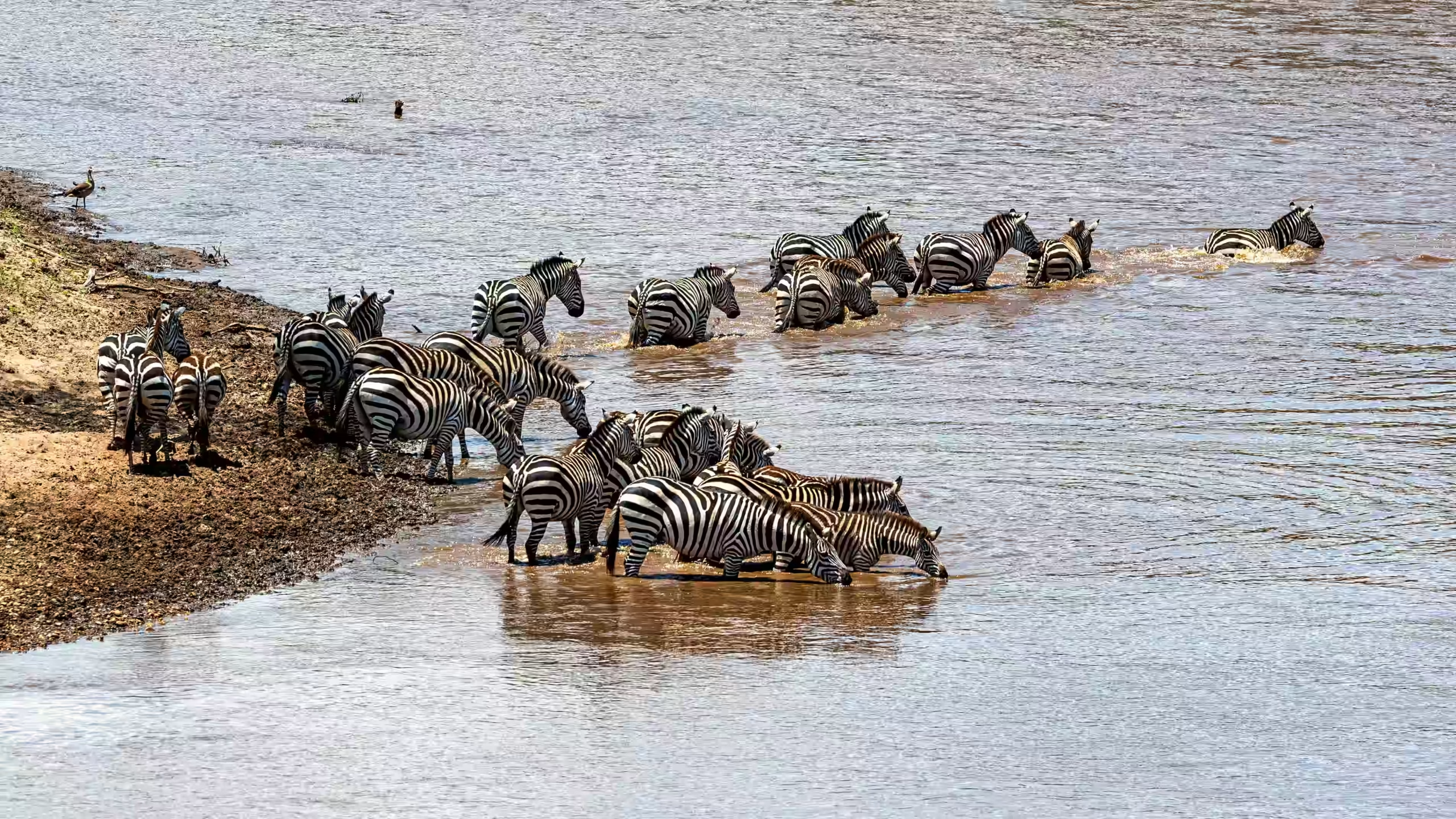
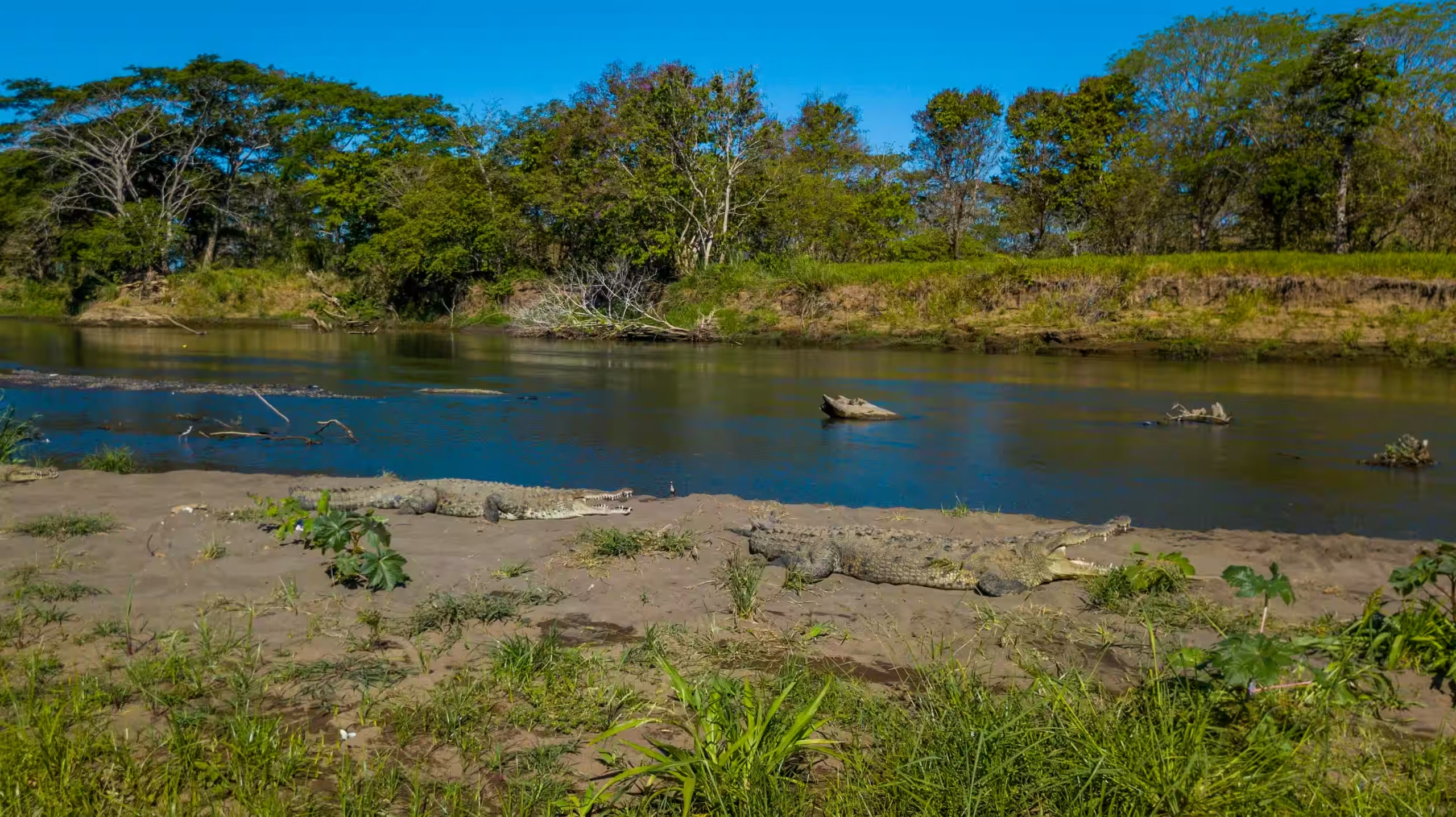
The spine of the park. Enormous crocodile, hippo pods in the hundreds, and elephant crossing between sandbanks.

North

The lake chain

Lakes Tagalala, Manze and Nzerakera, linked to the river and the best water for a boat safari.

Central

Stiegler’s Gorge

A gorge where the Rufiji narrows dramatically. The site of the hydroelectric dam, which has changed the park and is worth understanding before you come.

Various

Wild dog country

Nyerere holds one of Africa’s most significant wild dog populations. Denning season is roughly June to August.

North

Hot springs at Maji Moto

Reached on a walking safari — a rare chance to get out and cover ground on foot.

What to do

Ways to be in it.

01

Boat safaris

The reason to come. Mornings and late afternoons on the Rufiji and the lakes, at eye level with hippo, croc and elephant.

02

Walking safaris

Long-established here and properly run, with an armed ranger. Half-day and full-day walks, and fly camping in some areas.

03

Game drives

Standard drives across the floodplain and woodland, usually paired with a boat or a walk rather than done all day.

04

Fly camping

A night under a light tent away from camp, with a walk in and a walk out. Nyerere is one of the best places in Tanzania for it.

05

Fishing

Catch-and-release tiger fish on the Rufiji, arranged through some of the camps.

06

Birding

Over 400 species, with the water birds particularly strong. Skimmers on the sandbanks in the dry season.

Where to stay

The camp decides the safari.

Almost everything is in the northern sector along the Rufiji and the lakes. The rest of the park — the great majority of it — has no tourist camps at all. Being on the water matters more here than in any other Tanzanian park.

A camp terrace at dusk
“We have slept in every camp we put people in. If we would not stay there, it does not go in your itinerary.” Gabriel Nkini · founder
Cheapest way in

Park bandas and campsites

A night here — a simple room or a tent in the miombo, with hippo noise carrying up from the river all night.

The park maintains bandas, a rest house and public campsites in the northern sector, mostly within reach of the Rufiji. Cold water, shared facilities and no catering, so you need your own arrangements or a crew. Cheap, and closer to the river than the price suggests.

Best for
Budget trips, self-sufficient travellers, groups
Less good for
Anyone wanting service, comfort or a boat waiting for them
Where
The northern sector, near Mtemere and the Rufiji
On the water

Camps on the Rufiji

A night here — a tent on a bluff above the river, crocodiles on the sandbar below, and a boat pulled up in front of camp.

The core of Nyerere: camps strung along the Rufiji in the northern sector, all of them running boat safaris from their own frontage. Being on the river is what separates this park from every other Tanzanian one — you can be on the water at dusk with elephant drinking on the bank, which no drive can give you.

Best for
Boat safaris, birders, photographers, first visits here
Less good for
Anyone set on classic plains game viewing from a vehicle
Where
The Rufiji, in the northern sector
The lakes

Camps on the lake chain

A night here — canvas facing open water, fish eagles going over, and the sun dropping straight into the lake.

A string of camps overlooks the ox-bow lakes north of the river — Tagalala, Manze, Nzerakera. Game concentrates on these lakes hard as the dry season advances, and the sunsets over them are the images most people come back with. Similar comfort to the river camps, with more open views and slightly fewer boats.

Best for
Game concentrations from August, photography, quiet
Less good for
Green-season travellers, anyone wanting river boating specifically
Where
The lake chain north of the Rufiji
On foot

Walking and fly-camping

A night here — a light tent carried in, a fire, and an armed ranger who stays awake while you do not.

Nyerere is one of the few Tanzanian parks with a proper walking tradition, and several camps will take you out for a night or two in fly-camps. On foot the park reads completely differently: tracks, dung, birds, the smell of it. Dry season only, and you must be able to walk three or four hours in heat.

Best for
Walkers, second visits, anyone wanting out of the vehicle
Less good for
Mobility limits, small children, the rains
Where
Arranged through the northern-sector camps · dry season only

Boats and walking are the reason to be here. Nyerere is one of the very few Tanzanian parks where you can get on the water and where walking safaris are properly established. Both are run by the camps, so a camp off the river usually means neither.

The rains close things. A number of camps shut from roughly March to May, and some tracks in the north become impassable. If you are set on those months we will tell you plainly what is still open rather than send you to whatever is left.

Practical

Before you come.

Fees

TANAPA park fees are charged per person per 24 hours, with separate vehicle and, in some areas, concession fees. Rates change annually. Ours are always quoted inclusive so there is nothing to pay at the gate.

Health

Malaria prophylaxis is advised year-round. A yellow fever certificate is required if you arrive from a country with risk of transmission. We carry medical evacuation cover on every trip.

Visas

Most nationalities can obtain a Tanzanian visa on arrival or online in advance. If you are combining with Kenya, ask us about the East Africa Tourist Visa before you apply for either.

Vehicles

Extended Land Cruisers with a pop-up roof, window seats for everyone, a fridge and charging points. We do not put strangers together unless you have asked for a shared departure.

Connectivity

Patchy at best. Camps generally have some signal or satellite wi-fi in the main area; away from them, none. Most people stop checking after two days.

What to pack

Neutral colours, a warm layer for dawn drives, a hat, binoculars and a proper camera strap. Laundry is done daily at most camps, so pack less than you think. Soft bags only if you are flying.

Questions

The ones we are asked most.

Is Nyerere the same as the Selous?

It is the northern, photographic part of the old Selous Game Reserve, made a national park in 2019. The southern part remains a game reserve.

What makes it different from a northern park?

Boat safaris and walking. You can be on the water in the morning and on foot in the afternoon, which you cannot do in the Serengeti.

Will I see wild dog?

Nyerere gives you a genuine chance — it holds one of the largest remaining populations. It is still never a guarantee.

How many nights?

Three. Two is enough to see it but leaves no room for a boat, a walk and drives.

When should I avoid it?

April and May. Most camps close and much of the park is inaccessible.

Can I combine it with Ruaha?

Yes, and it is the standard southern-circuit pairing — a short flight between the two.

Begin here

Tell us the month, and we will place you.

Where you should be depends almost entirely on when you can travel. Tell us that and we will say honestly whether Nyerere is right for you that month — or whether somewhere else would serve you better.

Loading itinerary…
Saved Trips