Active Kilitop and Safaris

'
Lake Manyara National Park
Northern circuit · Tanzania

Lake Manyara National Park

A narrow strip of park between the Rift Valley escarpment and an alkaline lake — groundwater forest, tree-climbing lions and four hundred bird species, in a park you can drive across in a morning.

Size330 km² · two-thirds lake
Established1960
From Arusha1.5 hrs by road
Best monthsNov–Feb · Jun–Oct
Suggested stay1 night or a day
The place

Lake Manyara, in short.

Manyara is the small one, and it is usually treated as a half-day on the way to somewhere else. It repays more attention than that. The park is a ribbon two to three kilometres wide, pinned between a 600-metre escarpment and the lake, and that compression is what makes it interesting.

You enter through genuine groundwater forest — fig and mahogany fed by springs coming out of the escarpment wall, loud with baboon and blue monkey. Within twenty minutes it opens into acacia woodland and then to the floodplain and the lake, with flamingo strung along the shallows.

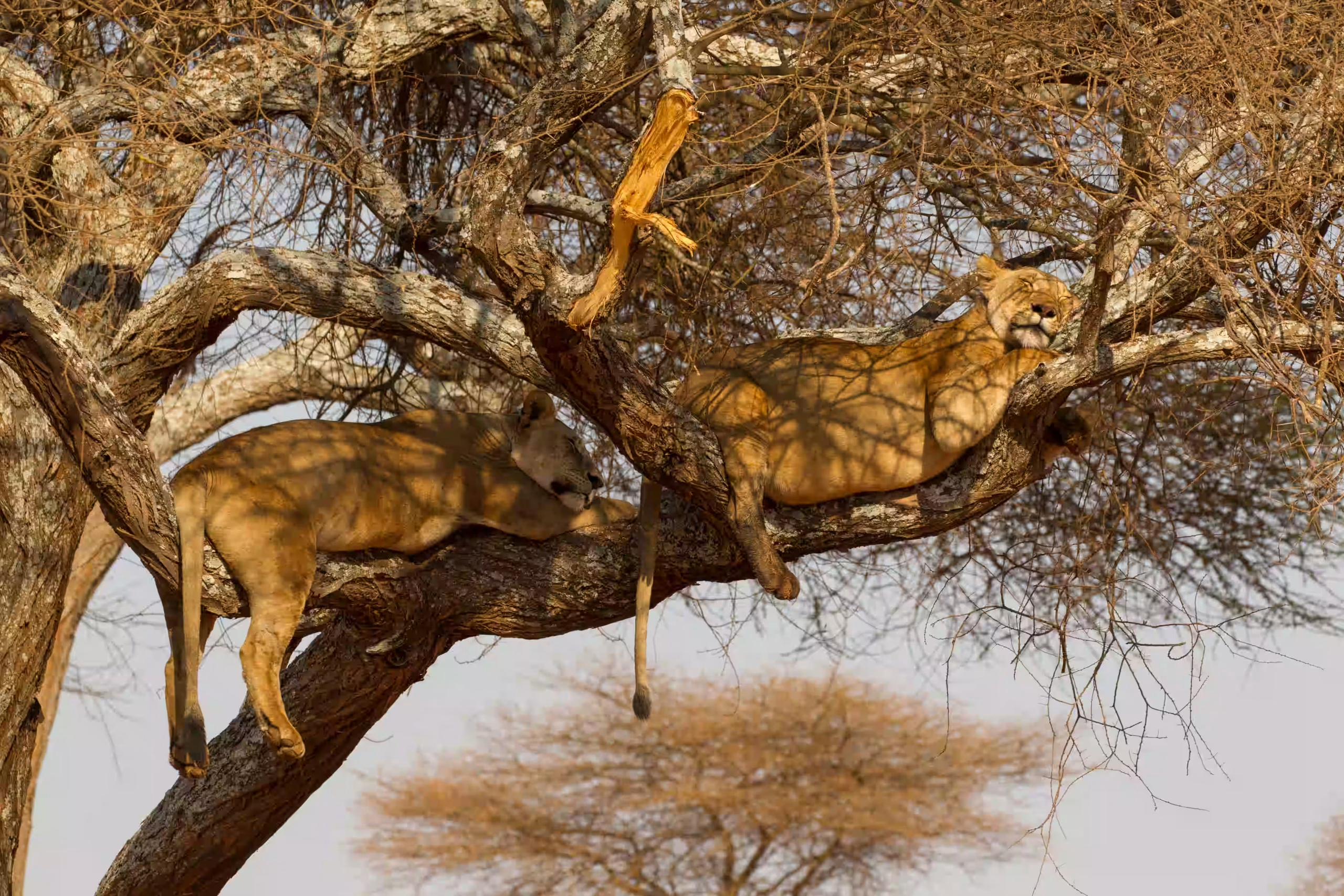
The tree-climbing lions are real but not reliable; they are seen here more than almost anywhere, and still not often. Come for the density and the variety in a small space rather than for one animal.

Getting there

Where to start, and how to arrive.

01

Drive from Arusha

1.5 hours · 126 km

Tarmac to Mto wa Mbu at the park gate. The closest of the northern parks after Arusha National Park and the easiest to slot in.

The trade-off

Comfortable as a day trip

Almost always combined with Ngorongoro

Mto wa Mbu village is worth an hour in itself

02

On the way to the crater

1 hr on to Karatu

Manyara sits directly below the escarpment road up to Ngorongoro, so it costs almost no extra driving to include.

The trade-off

The natural first or last stop of a circuit

Half a day is genuinely enough

Combine with the Mto wa Mbu cultural walk

03

Fly to Lake Manyara

1 hour from Arusha

An airstrip on the escarpment above the park, useful when arriving from Zanzibar or the southern parks.

The trade-off

Nearest strip to the Ngorongoro crater

Transfers up the escarpment take 40 minutes

Suits short itineraries

When to go

The month decides a great deal.

Nov – FebBirding at its best

Migrants arrive, the lake fills and the flamingo numbers rise. Green, and the best months for photography here.

Exceptional
Mar – MayLong rains

Wet, and parts of the floodplain become impassable. Very quiet and cheap.

Low season
Jun – OctDry season game

Animals concentrate near the lake and the springs. Easier big-game viewing, fewer birds.

Exceptional
Year-roundAlways open

Manyara works in any month — it is the least seasonal of the northern parks.

Good
Compare with the other parks
What to see

Where to point the vehicle.

North

The groundwater forest

Fig and mahogany fed by springs under the escarpment. Baboon troops in the hundreds, blue monkey overhead, and a complete change of light from anywhere else on the circuit.

Central

The acacia woodland

Where the tree-climbing lions are usually reported, and reliable ground for elephant and giraffe.

Lake shore

The floodplain & lake shore

Open country running down to the water, with flamingo, pelican and enormous buffalo herds when it is dry.

South

Maji Moto hot springs

Springs at the southern end of the park, reachable on a long drive that almost no day visitor makes.

Above the park

The escarpment & canopy walkway

A treetop walkway through the forest canopy, and viewpoints from the rift wall above the park.

What to do

Ways to be in it.

01

Game drives

A half-day covers the north well. A full day gets you to the hot springs at the southern end and back.

02

Canopy walkway

A 370-metre treetop walkway through the groundwater forest — the only one of its kind in northern Tanzania, and good with children.

03

Night drives

Permitted here, unusually for a Tanzanian national park, and one of the few places on the northern circuit where you can do it legally inside a park.

04

Canoeing

On the lake when water levels allow. Seasonal, and cancelled in dry years.

05

Mto wa Mbu village walk

A genuine cultural walk in the village at the gate — irrigation farming, banana beer, and a market drawn from more than a hundred ethnic groups.

06

Birding

Four hundred species in a very small area. Flamingo, pelican, storks, and the forest species you will not get elsewhere on the circuit.

Where to stay

The camp decides the safari.

Manyara is small, and most travellers do not sleep in it — they sleep above it on the escarpment or in the village below, and drive in for a half day. That is a reasonable way to do it, and we will say so.

A camp terrace at dusk
“We have slept in every camp we put people in. If we would not stay there, it does not go in your itinerary.” Gabriel Nkini · founder
Cheapest way in

Park campsites and bandas

A night here — a tent or a concrete room under the forest canopy, with baboons awake well before you are.

The park runs a public campsite and a handful of simple bandas near the northern gate, inside the groundwater forest. Cold water, shared facilities, and troops of baboons that will go through anything left outside. It is the only genuinely cheap way to sleep inside Manyara and it puts you in the forest at dawn.

Best for
Budget trips, birders, anyone wanting the forest at first light
Less good for
Anyone wanting comfort, privacy, or to leave food unattended
Where
Inside the northern gate, in the groundwater forest
The village below

Mto wa Mbu

A night here — a simple room five minutes from the gate, with the town awake around you.

Mto wa Mbu sits directly at the park entrance and is full of guesthouses, small lodges and campsites at village prices. It is the closest bed to the gate at any money, and the town itself — irrigated banana country settled by people from more than a hundred Tanzanian groups — is worth an afternoon in its own right.

Best for
Tight budgets, closest access to the gate, cultural walks
Less good for
Quiet, comfort, anyone wanting a view
Where
Mto wa Mbu village, at the northern gate
The view

Escarpment lodges

A night here — a room on the lip of the Rift wall, six hundred metres above the lake, watching the light move across the floor below.

The lodges above Manyara are built on the escarpment edge and the view down over the lake and the Rift floor is the reason to be in them. Twenty to forty minutes from the gate, comfortable, and popular with groups. Be clear about what you are buying: you are looking at the park rather than sleeping in it.

Best for
First visits, the view, comfort, mobility needs
Less good for
Anyone who wants to be inside the park at dawn
Where
The escarpment above the lake, on the Karatu road

Manyara pairs, it does not stand alone. Half a day inside the park is enough for most people, so we almost always attach it to Ngorongoro or Tarangire rather than build nights around it. Sleeping at Karatu covers both Manyara and the crater from one base.

The escarpment view is not the park view. Lodges on the rim above look down over the lake and the Rift floor, which is spectacular, and are twenty to forty minutes from the gate. You are looking at the park rather than sleeping in it.

Practical

Before you come.

Fees

TANAPA park fees are charged per person per 24 hours, with separate vehicle and, in some areas, concession fees. Rates change annually. Ours are always quoted inclusive so there is nothing to pay at the gate.

Health

Malaria prophylaxis is advised year-round. A yellow fever certificate is required if you arrive from a country with risk of transmission. We carry medical evacuation cover on every trip.

Visas

Most nationalities can obtain a Tanzanian visa on arrival or online in advance. If you are combining with Kenya, ask us about the East Africa Tourist Visa before you apply for either.

Vehicles

Extended Land Cruisers with a pop-up roof, window seats for everyone, a fridge and charging points. We do not put strangers together unless you have asked for a shared departure.

Connectivity

Patchy at best. Camps generally have some signal or satellite wi-fi in the main area; away from them, none. Most people stop checking after two days.

What to pack

Neutral colours, a warm layer for dawn drives, a hat, binoculars and a proper camera strap. Laundry is done daily at most camps, so pack less than you think. Soft bags only if you are flying.

Questions

The ones we are asked most.

Is Lake Manyara worth visiting?

As a half-day on a northern circuit, absolutely — it costs almost no extra driving and the forest is unlike anything else on the route. As a destination on its own, no.

Will I see tree-climbing lions?

Possibly. They are seen here more than almost anywhere and still not often. Treat it as a bonus rather than the reason for coming.

Can I do night drives?

Yes — Manyara is one of very few Tanzanian national parks that permits them, and they must be booked in advance.

Are there flamingo?

Usually, in varying numbers depending on lake level and season. November to February is generally best.

How long do I need?

Half a day covers the northern half properly. A full day if you want the hot springs.

Is it good with children?

One of the best on the circuit — short drives, the canopy walkway, and plenty of visible monkeys.

Begin here

Tell us the month, and we will place you.

Where you should be depends almost entirely on when you can travel. Tell us that and we will say honestly whether Lake Manyara is right for you that month — or whether somewhere else would serve you better.