Active Kilitop and Safaris

'
Zanzibar
Unguja · Tanzania

Zanzibar

An island with a thousand-year-old trading town at one end and some of the Indian Ocean’s best beaches at the other. Which coast you choose changes the holiday completely, and almost nobody tells you that before you book.

IslandUnguja · 1,666 km²
Stone TownUNESCO 2000
From Dar20 min by air
Best monthsJun–Oct · Dec–Feb
Suggested stay4–7 nights
The place

Zanzibar, in short.

Zanzibar is not one place. Stone Town is a dense coral-stone maze of Omani, Indian and Swahili building that has been trading for a millennium and is a UNESCO site. The north is beach resort country. The east is a long line of villages, seaweed farms and kitesurfers. The interior is spice smallholdings and one remaining patch of real forest.

The thing to understand before you book is the tide. On the east coast the sea withdraws close to a kilometre at low water and comes back over hot sand. It is beautiful and it is not a swimming pool. On the north coast at Nungwi and Kendwa the water is deep enough to swim at any state of the tide, which is why the north is busier and costs more.

It is also a Muslim island, and outside the resorts that matters: covered shoulders and knees away from the beach, and a different rhythm during Ramadan.

Most people come after a safari, and four to seven nights is right. Two nights in Stone Town and the rest on a beach is the pattern that works.

Getting there

Where to start, and how to arrive.

01

Fly from the safari

How most people arrive

Direct light-aircraft flights from the Serengeti, Arusha and Kilimanjaro, roughly one to two hours. You step off the plane in the afternoon and are on the beach the same day.

The trade-off

Baggage on light aircraft is limited, usually to soft bags of around 15 kg. We will tell you the exact limit for your flight.

02

Fly from Dar es Salaam

The cheapest hop

Twenty minutes in the air, many flights a day. Convenient if you are arriving on an international flight into Dar or coming up from the southern parks.

The trade-off

Dar’s airport is busy and connections can be tight. Allow more time than the schedule suggests.

03

Ferry from Dar es Salaam

The scenic way

A fast catamaran takes about two hours from Dar to Zanzibar City and lands you a short walk from Stone Town. Considerably cheaper than flying.

The trade-off

It can be rough between June and August, and the terminal at the Dar end is chaotic. Not the arrival to choose if you are prone to seasickness.

When to go

The month decides a great deal.

Jun–OctDry and reliable

The main season. Dry, breezy, warm and clear underwater. Book the north coast early because it fills.

Exceptional
Dec–FebHot and clear

The second season, hotter and stiller. The best visibility for diving and the best months for Mnemba.

Exceptional
NovShort rains

Brief afternoon downpours between long sunny stretches. Good value and few people.

Good
MarBuilding heat

Humid and increasingly wet late in the month. Still workable in the first fortnight.

Good
Apr–MayLong rains

Genuinely wet. Some hotels close, boats stay in, and the sea is churned. We will say so rather than sell it.

Low season
Jul–AugKusi winds

Dry and lovely, but the southeast wind blows hard on the east coast — which is exactly why the kitesurfers come.

Good
Compare with the other parks
What to see

Where to point yourself.

West

Stone Town

A UNESCO maze of carved doors, coral-rag alleys and Omani balconies. The Old Fort, the Forodhani night market, and the former slave market beneath the Anglican cathedral — which is the honest, uncomfortable centre of the place.

North

Nungwi and Kendwa

The only beaches where you can swim at any state of the tide. Nungwi is busy and full of life; Kendwa is quieter and has the sunsets.

East

Paje, Jambiani and Bwejuu

Long white beaches, seaweed farms worked by village women at low tide, and the kitesurfing centre of the Indian Ocean at Paje.

Centre

Jozani Forest

The last substantial forest on the island and the only place to see the Zanzibar red colobus, which lives nowhere else on earth. A mangrove boardwalk and a short guided loop.

Offshore

Mnemba Atoll

A ring of reef off the northeast corner with the best snorkelling and diving within reach of the island. A conservation-area fee applies and dolphins are often on the way out.

What to do

Ways to be in it.

01

Stone Town on foot

Half a day with a guide who can explain the doors, the trade and the slave market rather than just walk you past them.

02

Snorkel or dive Mnemba

A morning boat to the atoll. Reef in good condition, turtles common, and the visibility at its best from December to February.

03

Jozani red colobus

An hour and a half in the forest with a park guide. The only place in the world to see this monkey.

04

A spice farm

More interesting than it sounds — clove, nutmeg, cinnamon and vanilla growing in smallholdings, with an explanation of what the trade did to this island.

05

Kitesurf at Paje

Lessons and rental through the Kaskazi and Kusi wind seasons. Paje is one of the best places in the world to learn.

06

Safari Blue from Fumba

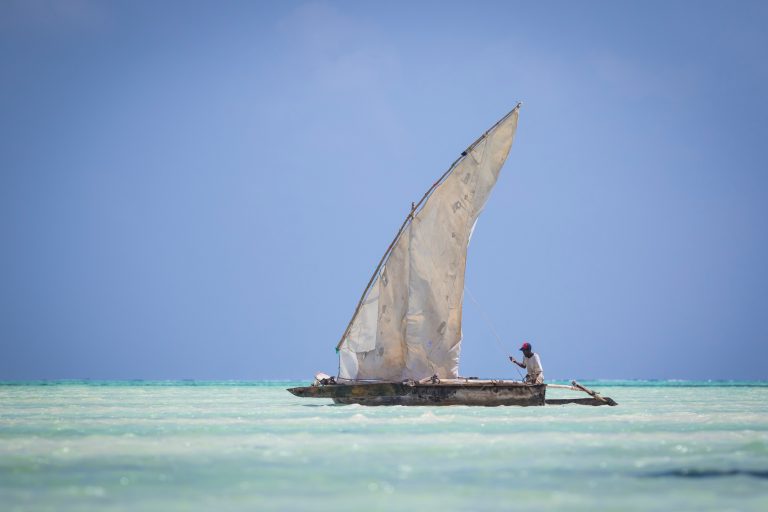
A day on a traditional dhow around the Menai Bay sandbanks, with snorkelling and a grilled lunch on a sandbar.

Where to stay

The coast decides the holiday.

This is the decision that makes or breaks a Zanzibar holiday, and it is not about the hotel. It is about which coast, because the tide behaves completely differently on each one.

A camp terrace at dusk
“People book Zanzibar and then discover the tide. Which coast you sleep on matters more here than which hotel you choose.” Gabriel Nkini · founder
Swim at any tide

The north — Nungwi and Kendwa

A night here — a room a short walk from water deep enough to swim in whenever you feel like it, and a sunset over the sea rather than behind you.

The northern tip is the only part of the island where the tide does not strand you. Nungwi is a working fishing village that became a resort strip and is busy, loud and full of life. Kendwa, a little south, is quieter with the best sunsets on the island. The widest choice of hotels at every price.

Best for
Swimming, first visits, families, nightlife at Nungwi
Less good for
Anyone wanting an empty beach or a quiet village
Where
Nungwi and Kendwa, the northern tip
Long and empty

The east — Paje, Jambiani, Bwejuu

A night here — a wide white beach with the sea a long way out in the afternoon, seaweed farmers working the flats, and the wind in the palms.

Kilometres of white sand backed by villages rather than resorts. The tidal range is enormous, so swimming is a matter of timing, and the compensation is space, lower prices and real village life. Paje is the kitesurfing centre of the Indian Ocean; Jambiani and Bwejuu are quieter.

Best for
Kitesurfing, value, long walks, second visits
Less good for
Anyone who wants to swim on demand, or who dislikes wind
Where
Paje, Jambiani and Bwejuu on the east coast
Sleep in the history

Stone Town

A night here — a carved door, a courtyard, a rooftop above the alleys, and the call to prayer across the town before light.

Converted merchant houses and former palaces inside the old town, most of them small. Staying here rather than visiting for an afternoon is the difference: the town empties of day visitors in the evening and becomes itself. Rooms can be dark and stairs are steep, which is what old coral-stone buildings are.

Best for
History, food, atmosphere, the first two nights of any trip
Less good for
Beach time, small children, anyone needing a lift
Where
Inside the old town · UNESCO World Heritage
Nobody else

The south-east and the small islands

A night here — very few other guests, a boat at the front, and no strip of any kind.

A scattering of small, expensive properties on the quieter south-east coast and on private islands off the north. They exist to be remote and they price accordingly. The trade-off is that you are committed to eating where you sleep.

Best for
Honeymoons, privacy, diving off Mnemba
Less good for
Tight budgets, travellers who want to explore independently
Where
The south-east coast and the private islands offshore

North coast for swimming, east coast for everything else. Nungwi and Kendwa are the only beaches where the water is deep enough to swim at any state of the tide. Everywhere on the east goes out a long way in the afternoon. Neither is better; they are different holidays, and choosing wrongly is the commonest regret we hear.

Two nights in Stone Town, then the beach. Stone Town is worth staying in rather than visiting, and it is much better in the evening once the day boats have gone. Do it first, while you still have the energy for it.

Practical

Before you come.

Fees

Marine park and reserve fees are charged per person per day where they apply, and Jozani, Mnemba and the Mafia marine park each have their own. We quote them inside the trip price rather than leaving you to pay at a jetty.

Dress and custom

These are Muslim communities. On the beach and inside a hotel, ordinary beachwear is fine. In a village, in Stone Town and anywhere off the sand, cover shoulders and knees. During Ramadan many places do not serve food in daylight and it is courteous not to eat or drink in the street.

Health

Malaria prophylaxis is advised on the coast year-round, and mosquitoes here are active at dusk rather than at midday. A yellow fever certificate is required if you arrive from a country with risk of transmission.

Tides

The tidal range is very large, particularly on the east coast, where the sea can withdraw close to a kilometre at low water. It is not a fault in the beach; it is the beach. We will tell you which coast suits how you want to swim.

Getting about

Taxis and transfers are straightforward and arranged in advance. Public dala-dalas are cheap and slow. Renting a scooter is popular and is also where most traveller injuries here come from.

Visas

Most nationalities can obtain a Tanzanian visa on arrival or online in advance. Zanzibar is part of Tanzania, so no separate visa is needed, but you will pass through an immigration desk on arrival.

Questions

The ones we are asked most.

North coast or east coast?

North if swimming matters most — Nungwi and Kendwa have water deep enough at every tide. East if you want long empty beach, village life and kitesurfing, and you do not mind the sea going out a long way in the afternoon.

How many nights?

Four to seven. Two in Stone Town and the rest on a beach is the pattern that works for most people. Fewer than four and the travel eats the holiday.

Is it safe?

Yes, ordinarily so. Stone Town at night is fine on the main routes and less so in unlit alleys. The commonest problems are scooter accidents and petty theft from beaches.

Do I need a separate visa?

No. Zanzibar is part of Tanzania and your Tanzanian visa covers it. You will still pass through an immigration desk on arrival, so keep your passport accessible.

When are the whale sharks?

Not at Zanzibar — that is Mafia, from October to March. Zanzibar has excellent reef and turtles, but the whale shark aggregation is a Mafia thing.

Can I do it as a day trip from the mainland?

You can, and you should not. The ferry is two hours each way and Stone Town deserves an evening. One night is the realistic minimum.

Is April really that bad?

Yes. The long rains are heavy and sustained, some hotels close, and boat trips are frequently cancelled. If those are your only dates we will tell you honestly what you can expect.

What about Ramadan?

The island keeps it seriously. Resorts operate normally, but in town many places close in daylight and the atmosphere changes. Some travellers find it the most interesting time to visit; others find it inconvenient. We will tell you the dates.

Begin here

Tell us the month, and we will place you.

Where you should be depends almost entirely on when you can travel. Tell us that and we will say honestly whether Zanzibar is right for you that month — or whether somewhere else would serve you better.