Serengeti concessions
Private and community land wrapping the park’s western and eastern edges. Same ecosystem, same animals moving across the boundary, no park rules after dark. This is where a Serengeti trip gets its night drive.
The north for its icons, the south for its space, the west for its forests.
Four very different stretches of Swahili coast. Most give it four nights; we would argue for six.
Route choice decides your summit odds far more than fitness does.
A Tanzanian team, based in Arusha, guiding the trips we sell.
Any itinerary can be shaped around the way you actually want to travel.
Eight of them, and not one is a countdown clock.
For the days either side of a climb, or a first taste of Tanzania before the long safari begins. All from Arusha or Moshi.

Tanzania does not permit night driving inside its national parks. Gates shut at sunset and you are expected to be in camp. Which means the choice of where you sleep — not what you book on the day — decides whether you ever see the other half of the animals.
It surprises almost everybody, and it is the reason so many itineraries quietly leave night drives out.
Not the Serengeti, not Tarangire, not Ruaha’s park core, not the Ngorongoro Crater. Park gates close around sunset and vehicles must be off the roads. This is not a policy any operator can get around, and if someone offers you a night drive “in the Serengeti”, they mean a concession outside the boundary.
Night drives happen in private concessions, Wildlife Management Areas and reserve land bordering the parks. If you want one, you have to sleep somewhere that has the right to run them. That is a decision made months before the trip, not on the evening you fancy it.
People imagine the daytime park with the lights off. What you actually get is a set of animals most visitors never see at all — genet, civet, springhare, bushbaby, porcupine, aardwolf — plus leopard and hyena behaving as they actually behave. That is the argument for going.
The pattern is simple once you see it: park land is closed after dark, and the land immediately around the parks is not.

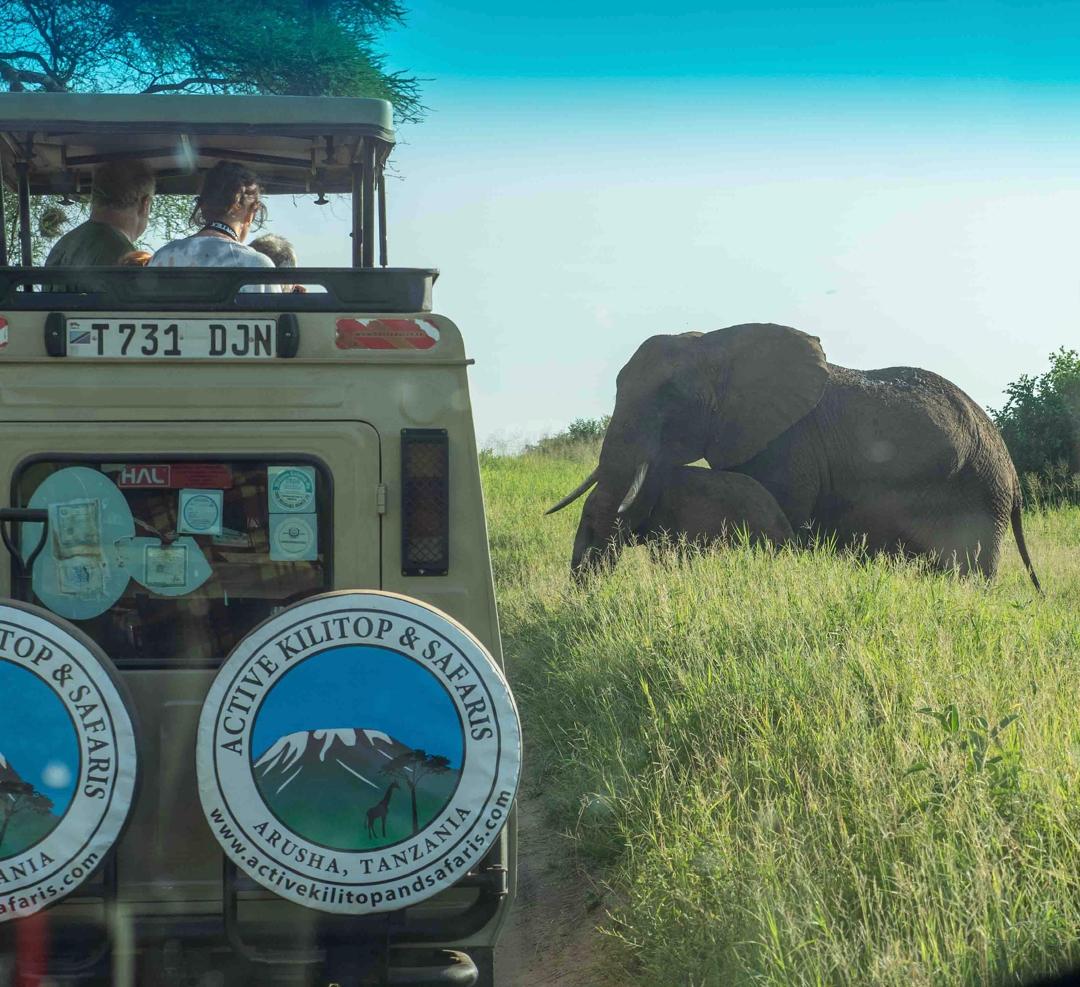
Private and community land wrapping the park’s western and eastern edges. Same ecosystem, same animals moving across the boundary, no park rules after dark. This is where a Serengeti trip gets its night drive.

Community-run Wildlife Management Areas on Tarangire’s doorstep, and the easiest night drive to add to a standard northern circuit because you barely move. Also where the northern circuit’s walking happens.
The reserve and concession land around the southern parks is more permissive than the park cores, and the southern camps are more used to running them. Pair one with an afternoon on the Rufiji.

No night drive inside the Serengeti, Tarangire, Lake Manyara, Ruaha’s park core, Nyerere’s park core, or the Ngorongoro Crater — where you also cannot be on the floor after about six in the evening. Anyone selling you otherwise is describing land outside the boundary, and you should ask exactly which.
Genuinely nocturnal and far more active after dark than the sleeping-in-a-tree version you meet by day. A night drive is the best chance you will get of watching one hunt rather than digest.
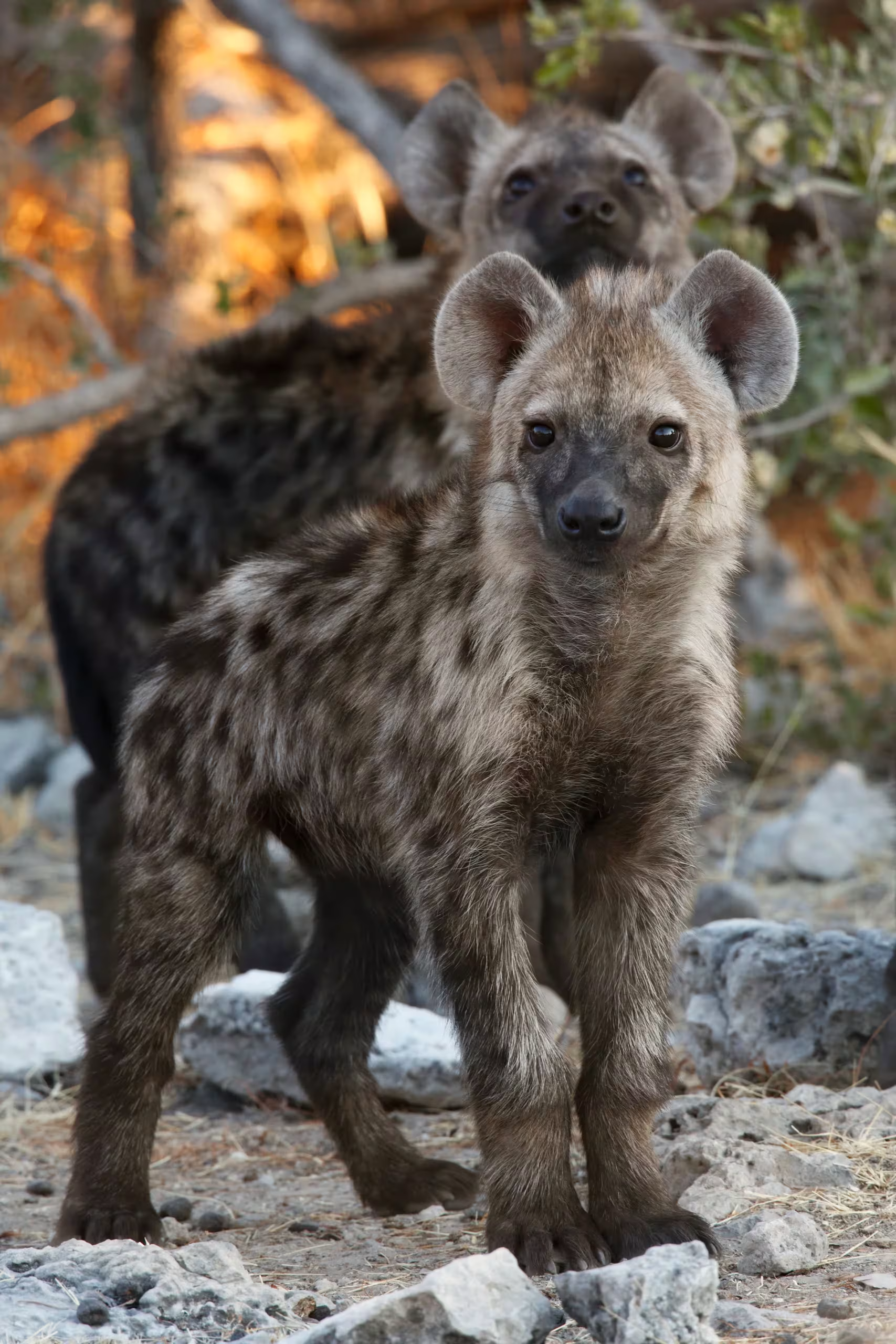
The clans are up and working. Whooping, hunting properly rather than scavenging, cubs out at the den. If you only ever see hyena slinking off a road at noon, you have not met them.
Common, almost never seen in daylight, and both are beautiful. A large-spotted genet along a branch is one of the small pleasures of a night drive.
The first thing most people notice: hundreds of paired reflections bouncing across open ground. Something between a tiny kangaroo and a rabbit, and completely absent by day.
Lesser galago, screaming in the dark, eyes enormous in a beam. Easier to hear than to find, and worth the effort of stopping the engine for.
Rare, shy, and the reason experienced guides keep going out. Nobody can promise you either. Seeing an aardvark is the sort of thing your guide will talk about for the rest of the week.
Crested porcupine rattling its quills, and honey badger doing whatever it likes because nothing argues.
Verreaux’s eagle-owl, scops owls calling all night, and nightjars sitting on the warm track ahead of the vehicle and lifting at the last second.
Spotlighting can be done carelessly, and carelessly done it is genuinely harmful. This is what a good operation does, and what you can reasonably ask for.
Most nocturnal mammals see poorly at the red end of the spectrum, so a red-filtered beam lets you watch without dazzling. Some guides use white to find and then switch to red to watch, which is a fair compromise.
Why A white beam held on an animal’s eyes blinds it for minutes, in a place where being blind is dangerous.The light goes on the body, or ahead of the animal, or on the ground. A guide sweeping a beam across faces to get a reaction is showing off, and you can ask him to stop.
A lit predator loses its stalk and a lit prey animal loses its chance. If something is hunting, the lamp goes off and you sit in the dark and listen, which is better anyway.
If the animal walks away, that was the sighting. Following a leopard cross-country in the dark stresses it, wrecks the ground and is exactly the behaviour that gets night driving banned in more places.
Ears back, freezing, moving away, abandoning a kill — all of it means leave. The animal is telling you the sighting is over and the correct response is to agree with it.
Two to three hours, engine off often, and nobody using a phone screen or a flash. A flash at night is worse than the spotlight and produces a bad photograph as well.
It is cold, and colder than you think. An open vehicle at 1,500 metres after dark in the dry season is genuinely chilly. Camps hand out blankets and you should take one even if you feel silly.
Photography after dark is hard, and that is fine. Long lenses and low light do not agree, flash is not acceptable, and most people’s night-drive photographs are poor. Go to watch. Some of the best sightings of a whole trip happen on nights nobody got a usable frame.
It costs you a relaxed dinner and it is not always the highlight it is sold as.
A mix of anti-poaching control, road and habitat damage from off-road driving in the dark, and disturbance to nocturnal animals. Whatever you think of the reasoning, it is the rule and TANAPA enforces it.
No. You cannot be on the crater floor after about six in the evening at all, let alone with a spotlight. The descent and ascent roads close and everyone comes up.
Usually two to three hours, leaving after dinner or in some camps at dusk so you catch the changeover between the day and night shifts, which is the most interesting hour of the lot.
Yes, on the same terms as a daytime drive: you stay in the vehicle, the guide decides the distance, and you do not stand up or lean out. Open-sided vehicles are normal and are not the risk people assume.
No, and be wary of anyone who implies it. You improve the odds considerably by going out after dark in good country, which is not the same thing as a guarantee.
You need to book the right camp in advance. The drive itself is usually arranged the day before with the camp. Getting the camp right is the part that cannot be fixed later.
Tell us where you are heading and we will tell you which nights of your route could carry a night drive and what changing camp would cost you. If your itinerary cannot take one, we will say so rather than sell you a sunset drive and call it the same thing.
Or call +255 762 914 714
✓Local Arusha team
✓Private guides and vehicles
Tell us a little about the trip you have in mind: when you would like to travel, who is coming and what you most want to see.
A planner in our Arusha office reads every request and writes back with a route that fits.
We usually reply within two hours.
Or message us on WhatsApp
Active Kilitop and SafarisSafari planner